Uncategorized

Instinct to Serve: CCI Dogs Transform Special Lives

Jacob and Yerba are best friends. When they met three years ago, Yerba was immediately drawn to Jacob. Jacob knew it, too, when Yerba rolled on her back and licked his face.

As I’m sure you’ve guessed, Yerba and Jacob are no ordinary couple. Jacob is a 14-year-old boy living with autism and cerebral palsy and Yerba is a yellow Labrador retriever carefully bred and trained to help Jacob navigate the life that is often so scary and confusing for him.

CCI_family

CCI skilled companion dog Yerba licks Jacob’s ear as they snuggle with Jacob’s mom, Candice, at home.

Their story began in 2012 when Jacob and his mother, Candice, went to a local park. There they met a young girl with Down syndrome and autism who had a “skilled companion” dog provided free by Canine Companions for Independence (CCI).

After researching CCI, Candice applied for a dog for Jacob, hoping it would help him with his anxiety and other social challenges. Nearly two years later, Jacob and Yerba met and their friendship has made an amazing difference for Jacob.

“He’s gained so much independence since he got her,” says Candice. “She knows her role and can sense when he needs her.”

Navigating life together

Jacob transitioned from elementary to middle school just a few weeks after he got Yerba. Stressful for even the most socially skilled 11-year-old, the move was scary and intimidating for Jacob. With Yerba at his side he was able to integrate much more easily. “After the first week, the other kids knew Jacob and Yerba by name,” says Candice, noting that people are curious about Yerba, who wears a special vest. Jacob has learned to answer strangers’ questions about her, building his confidence.

That extra attention can, however, be too much for him at times. Candice recalled a reunion with the person who raised Yerba as a puppy. The gathering with multiple dogs drew a crowd, and Jacob immediately became anxious and withdrew. Yerba sensed his anxiety and instinctively went to him, calming him and shielding him from the crowd.

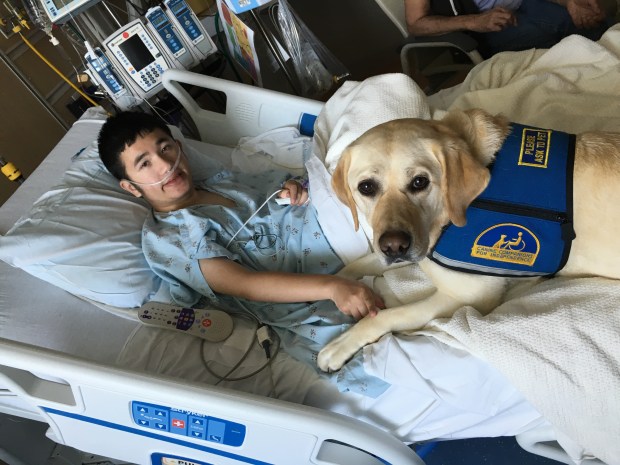
She also recalled how helpful Yerba was when Jacob was hospitalized for pneumonia. Jacob’s grandmother brought Yerba along to the hospital when she visited him, keeping him calm so he could use his energy to heal. “He sits next to Yerba and puts his hand on her. It really calms him,” says Candice.
Yerba_hospital_CCI

Yerba is always there for Jacob, even when he must be hospitalized for pneumonia.

Power to help

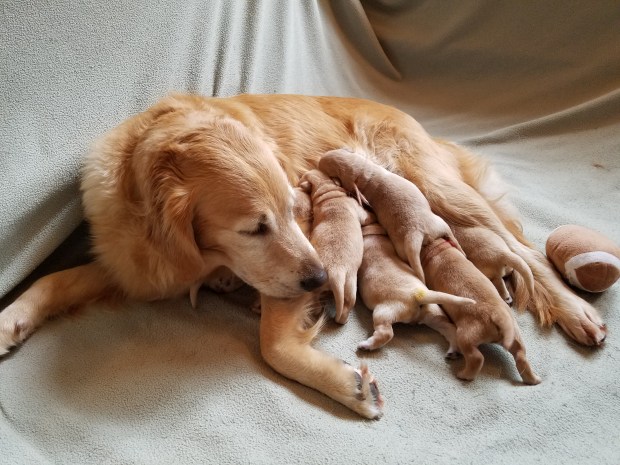
I was introduced to the CCI way by Sharon Mosbaugh, a volunteer “breeder caretaker” in Danville, CA. Sharon takes care of Salinas, a female breeder dog, and tends her litters. Sharon introduced me to Salinas and her litter of five pups, just days old. Sharon cares for them for their first eight weeks, when they are sent to volunteer “puppy raisers” who provide care and socialization and teach them basic obedience skills for the next 16-18 months.

I got to hold one of the tiny pups and couldn’t understand how Sharon could care for litter after litter and then let them all go. “How can I not give them up?” she asked. “When you see the power they have to help others, it’s really magical.”

At 18-20 months, the young dogs are sent to one of six regional training centers across the U.S. where they receive extensive training to serve in one of four specialized roles:

  • Service dogs, who assist adults with disabilities by performing daily tasks
  • Hearing dogs, who alert their partners, who are deaf or hard of hearing, to important sounds
  • Facility dogs, who work with clients with special needs at places such as schools, court houses, and hospitals, and
  • Skilled companions, like Yerba, who enhance independence for children and adults with physical, cognitive, and developmental disabilities
Salinas_litter_CCI

CCI breeder dog Salinas quietly nurses her pups just days after they were born in the home of breeder caretaker Sharon Mosbaugh.

Science and service meet at CCI

Sharon explained that breeder dogs, like Salinas, are the best of the best in terms of temperament and other traits required to provide the services clients require. All breeding occurs within 90 miles of CCI headquarters in Santa Rosa, CA, to maintain the control and consistency so important to the process.

Since its beginnings in 1975, CCI has placed more than 5,000 dogs across the U.S. Many more have been born into the program, but not all are cut out for the work ahead. “They won’t send a dog out to work unless they are absolutely certain of what it will do,” says Sharon.

She says that CCI is closely involved in every stage of the dog’s life to be certain it receives quality care and provides quality service. When a dog is retired, CCI places it with a loving owner and the client may apply for another dog.

CCI’s scientific approach attracts premier researchers who team with CCI to learn about the traits that make CCI dogs special. The organization is working with a consortium of canine research centers from Emory University, Georgia Tech, the University of California at Berkeley, and Dog Star Technologies on a study focused on the reward center of the canine brain.

Canine Companions Puppy

A CCI pup learns the basics with a puppy raiser before moving on to specialized training. (CCI photo)

The dogs just know

One of the most special traits of the CCI dogs is their sense for who needs help. “I’ve watched it work,” says Sharon, who worked with service dogs as a school administrator in Indiana and California.

She told the story of a young student in Indiana who was traumatized by the death of a teacher and a family member in a short span of time. He refused to return to school. When his parents finally got him to the campus, he refused to go in.

Sharon met him at the car with the school’s facility dog, Sally. The dog went to the boy and put her paw on his arm. He soon calmed down and agreed to take Sally for a walk around campus. He decided to stay.

“People have no idea how profoundly the dog will change their lives,” she says. “They were my secret teaching weapon.”

Get a dog or get involved

The CCI website is loaded with great information for people interested in getting a dog or volunteering in some capacity.

If you think you might be interested in a dog, check out this helpful page to determine if a service dog is right for you. CCI receives more applications than it has dogs available, so only the people who will benefit most will be considered.

CCI can’t do what it does without a large team of dedicated volunteers. If you would like to volunteer or help CCI in other ways, here are some ideas.

If you do get involved, I’d love to hear and share your stories of how these amazing dogs are changing lives.
A Better Place to Hang Around

Most parents of special kids have experimented with therapy cocktails that we hope will move the kiddos closer to “normal”. We try some standard ingredients in the early years, such as physical therapy, speech therapy, and occupational therapy, and then we might add some mildly exotic mixers like applied behavior analysis therapy or a social skills group to address a particular deficit. They all can be found on the government-paid menu.

The cocktail has made a difference over the years, but over time we begin to feel like regulars at the therapy bar. Progress has slowed or stopped, yet we come back day after day. It’s a comfortable habit, so we keep it up, not knowing what else to do.

But hidden on a back shelf behind the bar are alternative ingredients, a number of therapies and programs that offer a fresh approach that might be better for your child. They’re not on the government menu, so you have to do the research to find them.

Since launching Special Ops last spring, I’ve come across some unique programs that are making an amazing difference. And many of them are so much fun the kids don’t even realizing they are in therapy.

assisting-monkey

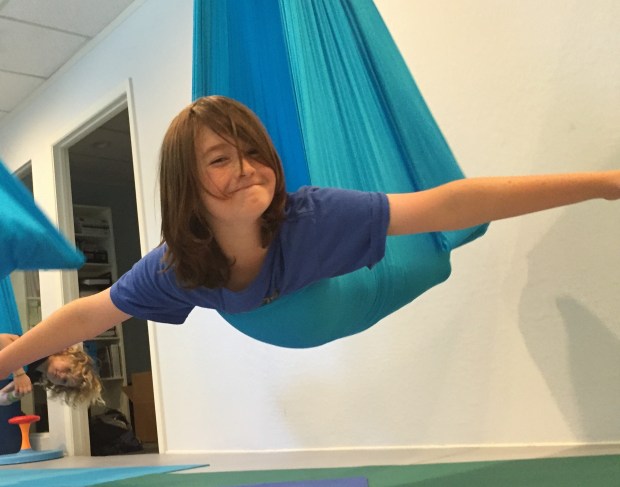
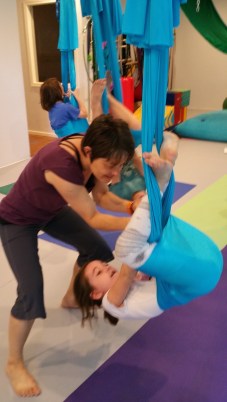
Jennifer helps a student achieve the monkey pose in her yoga hammock.

High-flying Fun

One such program is aerial yoga, and I recently had the pleasure of watching Jennifer Hector, a gifted instructor/therapist with Firefly Yoga Arts, lead a small group of special kids and their parents through a variety of yoga poses while suspended a couple feet above the floor. Jennifer offers 45-minute aerial yoga classes in Walnut Creek, CA, for school-aged kids.

The benefits of yoga for improving mind and body are well known, and therapists have used it to help people with developmental disabilities for many years. The relatively new aerial yoga discipline adds some unique dimensions that are particularly effective in helping increase mindfulness, body awareness, and strength.

The session begins much like a traditional yoga class, on the floor with a centering exercise and a series of poses bringing attention and mindfulness to one’s movement and breath. Then each student moves into a special yoga hammock, a stretchy sling hanging from the ceiling that supports the student while executing a variety of poses. Parents assist the children throughout the class to insure safety and success, build their confidence, and have a lot of fun together.

Mind, Body and Spirit

Jennifer explained that the hammocks provide a different type of feedback to the student that increases body awareness. Without the solid support of the floor, they must engage their strength differently to move into each position, which requires more mindfulness.

Aerial yoga, says Jennifer, can help build a more resilient nervous system, increasing body awareness, strength, and balance. Each pose involves multiple steps, which help improve key areas of executive functioning, such as attendance, initiation, and motor planning. It also can enhance overall well-being by boosting self-esteem, encouraging them to stretch beyond their comfort zone, and providing a sense of accomplishment.

aerial-yoga-group

Students have fun while benefitting from the physical, mental, and social aspects of aerial yoga.

Fun and Safe for Everyone

On the day I observed the class, Anna Tague was helping her 12-year-old daughter, Nicole, with each movement. Nicole was born with Phelan-McDermid syndrome, a genetic condition resulting from an abnormality of the 22nd chromosome. It is an extremely rare condition (only about 1,600 known cases globally) that causes global learning and expressive language delays.

“Nicole has very low body awareness,” says Anna, “so aerial yoga helps her be more aware.” Anna noted the importance of Jennifer’s calm, supportive approach. “She creates a very comfortable and safe place for the children and parents, which isn’t always the case with other programs.”

They met Jennifer at Anna’s school in Moraga, CA, where she was a paraeducator for 10 years and led a yoga program for special needs kids. She is now a Marriage and Family Therapist, continuing to work with special kids and their families in her psychotherapy practice at Treehouse Family Counseling Services in San Ramon, CA.

She learned of aerial yoga and was trained in the Yogapeutics method by founder Lindsey Lieneck in Austin, TX. She launched Firefly Yoga Arts and began teaching aerial yoga in 2016. If you’re interested in learning more or registering your child for a class, check out her new website at http://www.fireflyyogaarts.com/. If you live outside of Contra Costa County in northern California, look for another program closer to your home. It is growing in popularity across the country.

“The kids think it’s super fun,” says Jennifer. “That’s the best scenario for learning.”

About me: I am Pete Resler, a dad of two boys with specialhead and shoulders needs. I created this blog to tell stories of exceptional people, including those with special needs and those who give of themselves to make life better for them. My hope is that these stories expose more people to what’s good in the special needs world and inspire them to give of themselves to make life better for those with special needs.
You can help:  I’m always looking for new ideas. If you know someone you think should be featured, shoot me a note at specialopstories@gmail.com.

Blind to Limits

On any given day, you might find Daniel Stickney surfing or scuba diving in the Pacific Ocean, participating in his college’s student government, or assisting engineers to make technology more accessible. He’s traveled the world and learned new languages. You could say the 22-year-old has a great life, that he holds the world in his hands.

The fact that he can hold anything in his hands is little short of a miracle, considering that shortly after his birth the doctors told Danny’s parents that he had cerebral palsy and would likely live his life in a fetal position.

“Daniel is a gift from God,” says his father, Dyer, a single parent who made it his mission to do whatever he could to help Danny live as independent a life as possible. Finding little help close to home, Dyer expanded that mission to other parts of the world in search of therapies that would prove the doctors wrong. Thanks to intense physical therapy at a young age, Danny is able to use his hands well enough to do many things others with his disability can’t.

Yes, I’m disabled, and…

Danny’s disabilities are merely conditions, hardly limitations. When I first sat down to talk with him and his older brother, Stanford, I asked Danny to tell me about his disabilities. He told me that he is legally blind due to cortical visual impairment, which limits his vision to a periodic sliver from the edge of his right eye.

I expected him to talk about his CP, so I prompted him for more. I got silence.

Stanford explained that Danny was raised without awareness of his disabilities. It wasn’t something he paid attention to until fairly recently. Stanford explained that their father refused to let any of the children’s limitations prevent them from participating fully in life. The focus is always on what each member of the family can do, not what they can’t. Never why, always why not.

Stanford then prompted Danny to talk about his CP, and Danny spoke briefly about his use of a wheelchair. He quickly shifted the conversation to how much he enjoys speaking with people in retirement homes to help them make their own transition to using a wheelchair. The more I tried to get him to talk about himself, the more he talked about how he loves helping others.

Danny is also a “big man on campus” at the College of Adaptive Arts in San Jose, where he takes classes and is vice president of the student government. When he’s not in school, he gives a lot of his time volunteering with various organizations. He is currently a board member for the California chapter of TASH, a disability advocacy organization, and was a featured speaker at its 2015 national conference.

danny-filming

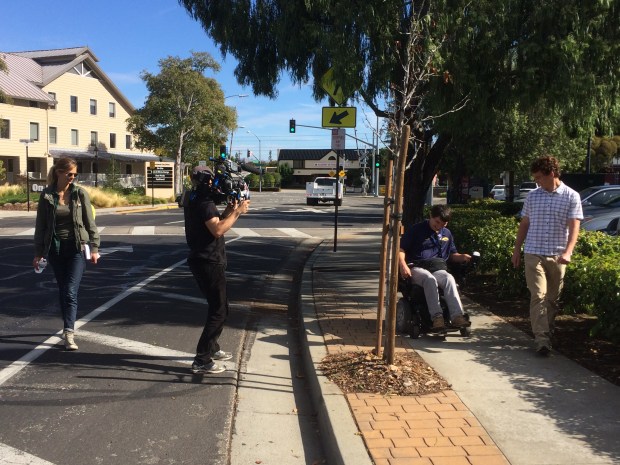
Danny navigates a sidewalk in Los Gatos, CA, during filming of “A Day with Danny” for the Google Accessibility Team.

Shaping tech access

Like any “millennial,” Danny loves technology. He and Stanford had the opportunity to hear Charles Chen of the Google Accessibility Team speak at the Vista Center Blind Expo in Palo Alto, CA, about the work the team was doing to make technology accessible to everyone. They chatted with Charles afterward and soon were meeting with the team and testing a variety of equipment and applications designed to help the visually impaired and people with limited or no fine motor skills access technology.

Danny was also featured in a Google Accessibility documentary called “A Day With Danny,” which was used internally and to promote the company’s Google Impact Challenge: Disabilities program, through which it is donating $20 million to 29 non-profits that are using technology to address a variety of accessibility challenges.

A better wheelchair

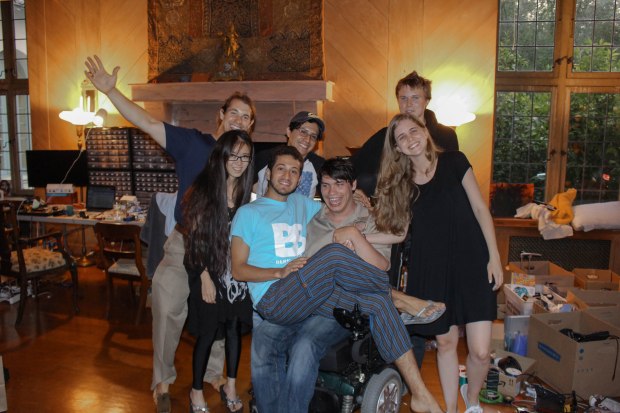
This summer I spent an afternoon at Danny’s home in Los Gatos, CA, to observe what Danny called a “Makeathon.” A group of young engineers and creative problem solvers lived with Danny and his family for a week to observe him and develop ways to help him in his daily life.

makeathon-group

Danny and his brother, Stanford (back row, left), take a break for a group photo with the “Makeathon” engineers.

By the time the group departed, Danny had a wheelchair equipped with infrared sensors that alert him to obstacles and dangers as he moves about. The engineers used existing technology to design a new type of detection system that alerts Danny when he nears stairs or other potential dangers. They will share what they learned in the open-source community in hopes that others will take their information and adapt it to solve other problems.

Two of the engineers, Stephanie Valencia and Tomas Vega, are co-founders of Assistive Labs, a “global team of dreamers and doers” working to “increase access to assistive devices for people living with disabilities in global markets by collaboratively building adapted and affordable devices” in the areas of health, education, communication, and mobility.

(I will be writing specifically about the “Makeathon” and Assistive Labs in a separate post, so stay tuned. And I hope to include video of me driving an early version of Danny’s retrofitted wheel chair. Too funny to miss!)

What’s next?

Danny views his future as limitless. He wants to continue his advocacy work for people with disabilities, particularly those who are visually impaired or who use a wheelchair. “I love to be involved in the community,” he says. “When I get a chance to help people with disabilities, I try to make life better for them.”

“I want to make it clear that even though I’m in a wheelchair I’m still a human being,” he says. “Anything I think I can do, I can do.”

Hello, Officer!

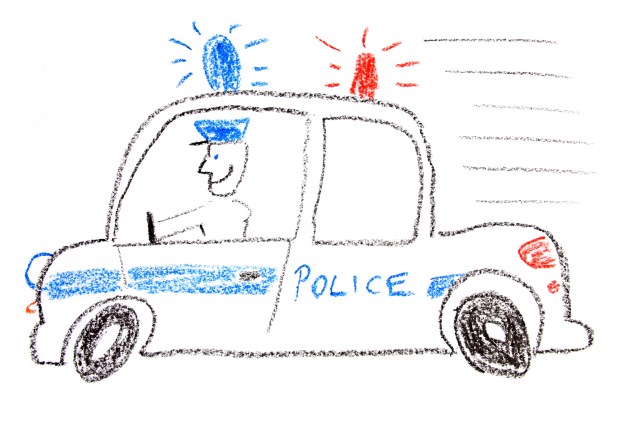
I’d been cleaning leaves out of the gutters on a recent Saturday morning when the police showed up at the house. They’d received a 911 call from my cell phone, which I’d left on top of my dresser in the bedroom. The caller hung up and no one answered when the dispatcher called back.

Christian!!!

Son #1 loves cell phones. He doesn’t have his own, so he grabs any he finds laying around and starts playing. Mine unfortunately has easy access to the “emergency call” button, so the local 911 dispatchers are getting to know us pretty well. Just in the past 6 months I’d guess he has done it at least five times, sometimes chatting with the dispatcher until we intervene.

And he doesn’t just call 911. Our friends, coworkers, and dozens of other people on our call logs have received random calls from a boy who is hard to understand. Those who know us and Christian laugh it off, but 911 dispatchers are a different story.

A few months ago, C rang up 911 and was babbling to the dispatcher when my wife walked into the room, scolded him, took the phone from him, and hung it up. She didn’t know he had called 911, and I answered when the dispatcher called back a couple minutes later.

When I explained what had occurred, she very sternly explained that it is concerning to the police when the caller hangs up, particularly when someone is yelling in the background. Fortunately, my explanation and sincere apology were enough to avoid a visit from Concord’s finest that day.

police-car-drawingThe Wanderer

The last thing I want to do is distract the police from their important work because of a phone-happy boy with special needs. Numerous times, in nearly every community where we have lived, that important work has involved searching for that same mischievous boy. You see, Christian likes to wander.

From the time he could walk, he’s wanted to explore. At four years old, on a chilly December Sunday morning, he and brother Ben were playing in the fenced back yard of our hillside home on the edge of Kennett Square, PA. After a little while, Ben came in, wandered around for a few minutes, then asked, “Where’s Christian?” Sarah and I bolted off the couch and ran out back to look for him, finding only an open gate.

We panicked. Sarah went into the house to see if he had come inside undetected, while I ran to the front of the house to search. I didn’t see him, so I ran around the neighborhood, down the hill to the usually busy road at the bottom and through yards, yelling his name. He was not inside, so Sarah called the police.

My mind was racing with worst case scenarios. I got in my car and began driving all around the neighborhood. As the minutes went by I became more and more panicked. We might never find him. Someone might have taken him. He’s probably scared to death. My heart was exploding and my adrenaline was raging.

Downhill All the Way

I went back home after about 10 minutes. Sarah had just gotten a call from the police. They’d found him… nearly a mile from the house.

He’d walked down the sidewalk to the road at the bottom of the hill, turned right and left town. He walked along the curvy road with no shoulder, a hill on his right and a wooded creek on his left, all the way to the next crossroad where a couple saw him and stopped. They called the police at about the same time we had.

In a few minutes the squad car pulled up in front of our house. Two young male officers got out and opened the back door. When C climbed out, Sarah broke down and ran to him. I held it together, but could barely speak to the police. We thanked them over and over.

Christian was all smiles, completely unfazed by the experience. He got to see new places, meet new people, and ride in a police car. What’s all the fuss?

I still think about that morning and how fortunate we were. He could have been hit by a vehicle. He could have fallen into the creek. He could have been taken by someone.

Thank God it was a Sunday morning and there was very little traffic on the road except for the kind couple who found him. I wish we could have thanked them personally.

From then on, I always confirmed that the gates were locked before letting the boys into the yard. We also have added multiple locks to exterior doors in each subsequent house, high enough that he couldn’t reach them. But doors are only so tall and kids grow so fast… and parents sometimes forget.

Exploring California

When Christian was almost five, we moved to Grover Beach, CA, into a nice neighborhood with a park just a block away. Within a few months, we met the local police. C loved that park, so at the first opportunity, the first open door, he went there… alone. Someone called the police and I got to the park at about the same time they arrived. I and they were not happy, but C was.

He flew the coop several times in the three years we lived there. We had become friends with another neighborhood family with young kids, so that is where he typically headed. A couple times he got sidetracked by an open vehicle parked on the street or an open garage door at a home along the way. We met several neighbors that way.

On one solo outing, he came across a group of women engaged in door-to-door ministry for a local church. They asked him where he lived and he pointed to our friends’ home, where he was headed to play with their kids. The ladies took him there and the babysitter had no idea who he was. He didn’t care. He walked through the door and the kids played while the babysitter called our friend, who then called us, knowing exactly who had invaded her house.

The Streak

Shortly after we moved north to Concord, CA, he hopped on his little trike, wearing just his undies and socks, and pedaled a few blocks across a busy road until the street turned sharply to the right. He didn’t want to turn, so he continued straight up a driveway, got off his trike and knocked on the door.

While I frantically searched the neighborhood, Sarah called the police. They had already gotten a call from the couple that lived in the house, so I headed there. C was happily sitting in a chair watching TV, while I got icy stares from the couple and a good talking-to from the police.

I suppose my calm demeanor and light scolding of the C-man masked my concern and increased theirs, but this had become fairly routine for us. I could have been angry and explained to him that he can’t wander off by himself, but he wouldn’t understand. It’s just another one of those things in our life that is hard for others to understand.

While C still wanders off from time to time, it’s much less frequent and we’ve learned a few things that make it more manageable. We still freak out, but we know his habits, we’ve marked his favorite destinations, and we have faith in the police and his guardian angel. We’re also looking for a good place to hide our car keys.

This is a Test: The Inner Struggles of a Special Needs Parent

On the day we found out that Christian would be born with Down syndrome, family and close friends tried to make us feel better by telling us, “God only gives you what he knows you can handle.” Their intentions were pure, but I couldn’t help but feel that diagnosis was more of a punishment than a gift. I’m not proud of that, but it’s the truth.

It was 16 years ago, but I can still vividly remember sitting with Sarah while a genetic counselor at a large Catholic university hospital near Chicago explained what was known at that time about the physical and mental effects of trisomy 21, the medical name for Down syndrome. She made it clear that those effects can manifest themselves in mild to severe ways, but there were some certainties that we thought would change everything.

The counselor then presented our options. Options?!? The soft spoken lady at the Catholic hospital told us we could have the baby and either keep it or give it up for adoption, or terminate the pregnancy.

I would have never considered termination, but she mentioned it and it made me think very briefly about it and, more importantly, why we wanted to have a child. It wasn’t because we expected to have the perfect child. It was because we loved one another and wanted to have, raise and love a child together. We had made that decision several months earlier and no other decision was necessary.

As certain as that sounds, we were both very shaken and disoriented by the news. The script of our lives had been altered and we had no idea what that meant.

Now what?

Over the next several weeks we mourned the loss of the “normal” child we had been preparing for. We continued on with the things that still had to be done, such as preparing the baby’s room, picking names, attending baby showers, and so on. We did a lot of research and talked to lots of people to try to fill in the blanks about the future, and then we waited to see what would happen.

The pregnancy grew complicated and Christian was born four weeks early by emergency C-section. He was only five pounds, but he and Sarah both came through it fine. He had none of the heart deformities or other physical issues that occur more frequently in Down’s kids. We felt fortunate.

We began weekly treks to Easter Seals when he was just six weeks old, hoping the therapeutic interventions would help with his development. He hit all of his milestones, just later than typical kids, and he was happy and healthy. We adjusted to our new life.

beach-122406

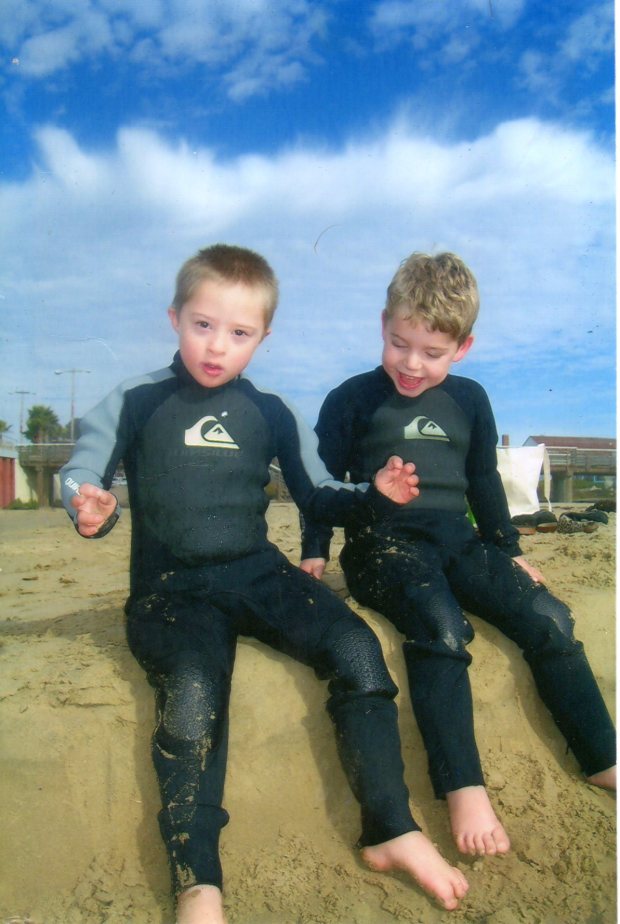
Christian and Ben, Pismo Beach, CA, 2007

A little ‘normal’

A couple years later Sarah was pregnant again. We refused the genetic testing this time. Our life plan had become a daily plan, so we were OK with whatever God gave us. Benno was born following a normal, uncomplicated pregnancy. He was healthy. He had the normal number of chromosomes. This was how we had imagined it would be; you know, normal.

Within a few years, he began showing some signs of autism, nothing in the “Rain Man” realm, just some behavioral anomalies that caught our attention. He was evaluated and the diagnosis was confirmed. Not so normal after all.

Friends told us that God must really have faith in us as parents to give us two special children.

Apparently the almighty’s faith in us was immense, because it wasn’t long before Christian was evaluated and also diagnosed with autism. And Ben has ongoing struggles with anxiety, obsessive-compulsive disorder (OCD), and impulse control challenges.

And they’re both fully infected with puberty.

Other than that, things are normal.

Why us?

Ever since that day we met with the genetic counselor, I’ve frequently wondered why this was happening to us. Were Sarah and I being punished for something? Were our children being punished? What did we do to deserve this?

I’ve looked at other parents and their typical kids and wondered why this happened to us instead of them. What was so special, or awful, about us for this to happen?

I feel guilty, petty and selfish because of these thoughts, but I still have them sometimes, especially on the more challenging days.

Every time I’m embarrassed by their behavior in public, every time I get frustrated because they can’t understand or process what I tell them, every time I lose my cool and snap at them, I feel like a failure. Maybe God was wrong about me.

Sarah and I talk about these things a lot. The fact that we still talk at all could mean that God knew what he was doing. The stress of raising special kids has at times torn us apart and at other times brought us together. Many, many marriages don’t survive the challenges of raising a special needs child. Ours has survived that, and three major relocations, two layoffs, and whatever is next.

We are not perfect, but we are certainly determined to prove that God knew what he was doing.

About me: I am Pete Resler, a dad of two boys with specialhead and shouldersneeds. I created this blog to tell stories of exceptional people, including those with special needs and those who give of themselves to make life better for them. My hope is that these stories expose more people to what’s good in the special needs world and inspire them to give of themselves to make life better for those with special needs.
You can help:  I’m always looking for new ideas. If you know someone you think should be featured, shoot me a note at specialopstories@gmail.com.

Damn the Dam! Let It Flow

Have you ever told yourself no? Have you ever let an opportunity slip by because you doubted your ability to succeed or you didn’t think you would like it? I lived most of my life telling myself no 10 times for every one time I told myself yes. I became a master dam builder, able to build a dam in an instant to stop the flow of opportunity. It became so comfortable that I started offering and building dams for other people in my life.

“Are you sure you want to do that?”

“No, you can’t sign up for alpine horn lessons.”

“No, you can’t have a dog because I know you. You’ll play with it, but I’ll be the one who has to pick up the poop.”

I told myself I could never find joy in writing about special needs because I wasn’t interested in sharing my daily parenting trials with strangers, like most of the other special needs bloggers were doing. Well, here I am joyfully writing because I told myself yes and I found a different approach that people seem to like. And I am learning to say yes to myself more and more, tearing down some of the dams I had built to meet what I interpreted as other peoples’ expectations of me.

This is top of mind for me because of this short video. I shared it recently on my Special Ops Facebook page to highlight my earlier post about the Exceptional Needs Network Camp that my son, Christian, attends.

More importantly, I never thought what happened in the video was possible. (Go ahead, watch the video. I’ll wait.)

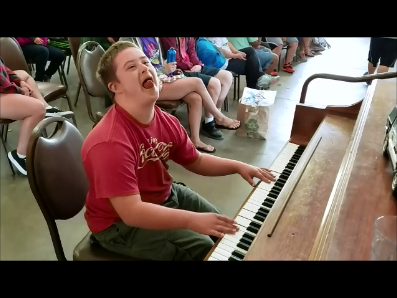
To you it might just be a 15-year-old boy with Down syndrome messing around on a piano, hamming for the crowd. To me it was a miracle (the playing; I already knew about the hamming). We don’t have a piano in the house, we rarely listen to jazz, and the handful of times I’ve seen C around a piano he was only interested in making the most noise possible and banging the keyboard cover up and down, not exactly how I envisioned Beethoven starting out. So when C’s camp counselor told me he was going to play the piano during the closing talent show, I rolled my eyes, climbed up on top of the dam I had subconsciously built years earlier, and braced for the noise.

I positioned myself next to the piano so I could get some video as a record of his camp experience.  When he began to play, I looked at his counselor, who gave me the “I know, right?” look, and then I started simultaneously laughing and crying (amazingly keeping the phone steady enough to record the whole performance).

His beautiful music blew a big hole in my dam, knocking me off into the reservoir of possibility that had built up behind it and was now gushing over the top. I had let his disability blind me to his ability, and when he finally got the opportunity he shocked me with his awesomeness.

The real beauty, for me, is how natural it was. No lessons, no scales, no practicing “Mary Had a Little Lamb” over and over. It just flowed out of him. His possibilities are damless.

Where to Start

The Subplot of Marlys Kehm in the Evolution of Special Education

In 1945, Marlys Kehm was a nursing student, newly married to her sweetheart, who had recently returned from captivity in a World War II German prison camp. But she was not allowed to remain in school because, she was told, a married woman’s “place is in the home.”

Today those words would make rights activists seethe and lawyers salivate, but post-war America was very different then.

It was also very different for people with disabilities. Many were sent away by their families to live in institutions. None were in public schools. They were “the handicapped”:  “retarded,” “crippled,” “Mongoloid,” “idiots.” The use of these terms causes outrage today, but then they were the words used to describe those we now call the “differently abled.”

Marlys didn’t know it at the time, but, because society had closed the nursing door to her, she would take a path years later that would help shape the way disabled children are educated and assimilated into society today.

MarlysKehm

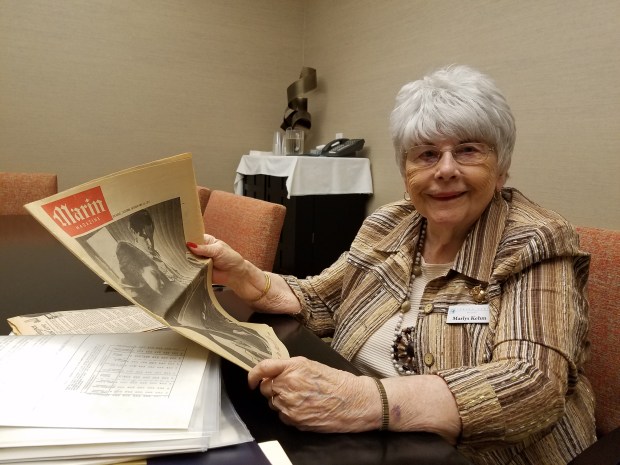
Marlys Kehm looks through a thick scrapbook from her distinguished career as an early special education innovator.

Opening a New Door

Marlys settled in to raising her family, moving between military bases over the next 20 years. As her children grew older, she began taking college classes with the hope of becoming a teacher. While they were stationed in the Panama Canal Zone in the early 1960s, she took a class taught by Dr. James M. Wolf from Florida State University, a leading authority in the developing field of special education.

“It was fascinating. That’s when I really became interested in special education,” she said.

In 1963, her husband was transferred to the U.S. Army base at the Presidio near San Francisco. Dr. Wolf encouraged Marlys to continue her studies at San Francisco State University, which had a high quality special education program.

She completed her degree there in 1965 and posted the highest score on the San Francisco School District teacher’s exam, landing a job teaching the “educable mentally retarded” at Horace Mann Junior High School in the city’s Mission District.

Start Where They Are

It quickly became apparent to her that the standard educational method she learned in college was not going to work there. The standard method was, and still is, to design and teach a general course of study to the entire class, and then grade each student based on progress against a standard. But, Marlys found, her special students were each starting from a very different place, with different challenges. The standard method would not work for most of them. Her thinking and approach started to change

The next year, Marlys was asked by a former SFSU professor to teach in Novato, north of San Francisco. She found similar issues there, including students with behavioral problems. While the standard approach was to discipline the child, Marlys wanted to first understand what might be causing the child to act out. That’s when she began visiting her students’ homes.

Understanding Annie

She tells the story of “Annie,” a young girl there who had severe behavior issues. Marlys went to Annie’s home to meet with her father, who was raising his children alone. He urged Marlys to spank Annie, as that was the only way he could get her to listen.

Marlys suspected that might be indicative of the larger problem, so she did the opposite.  “I could see this family didn’t have much. I had a friend who gave me clothing that no longer fit her daughters,” said Marlys. “I would ask Annie to come to school early, and I would give her the clothes and teach her how to care for herself. It wasn’t long before her bad behaviors stopped. The principal noticed the change and asked me what I did.

“I showed her that I cared. School became a safe place for her.” Marlys helped build Annie’s self-esteem, and that opened the door to learning. She never would have been able to do that if she treated her just like every other student. She figured out where Annie was and met her there; that’s where her education began.

Treasure Hunt

Soon, the nuns running St. Vincent’s School for Boys in San Rafael asked the Marin County special education department to provide a teacher for a class of special boys. They sent Marlys.

St. Vincent’s opened in 1855 to care for the orphans of California’s Gold Rush, and when Marlys joined the staff in the late 1960s, it was a residential care facility for emotionally disturbed boys.

“That was a really wonderful place. The nuns truly cared for the boys,” says Marlys. “You had kids with behavior problems, so how were you going to reach them to teach?”

Marlys spent each evening planning her approach with each student for the next day. She shared the story of one boy who would not sit still long enough to learn. “I made up a treasure hunt for him,” she says. “I would hide his assignments around the room and give him clues about where to find them. He had to finish each assignment before he could look for the next one. It gave him a reason to focus and he began to learn.”

“I reached down to him and the other boys,” she says. “You had to teach each one individually.”

20160718_112131

Marlys exchanges information with another Marin County school administrator visiting Forest Meadows Development Center in 1971. (Please excuse the quality; copied from a very yellowed Marin Independent-Journal clipping.)

‘Uneducable’ Youth

Word of her innovative, caring approach to teaching special children was spreading. In 1970, she was asked by the Marin County Schools Office to run the new Forest Meadows Development Center at Dominican College in San Rafael. Marlys developed the programs and hired the staff. She served as the principal, then called “head teacher,” from 1970-75.

The students there were considered “uneducable,” mentally and physically affected children who were ineligible for the type of classes Marlys had taught in regular public schools. Forest Meadows was “a training school for the multiple-handicapped child and young adult,” according to a May 15, 1971, article in the Marin Independent-Journal.

“That was a challenge. It was not like teaching I had done before,” she recalls. “You really did have to start where they were. Some couldn’t feed themselves. We worked closely with the parents to figure out how we could help them.”

Forest Meadows was truly a community project. According to the Independent-Journal article, “There are four teachers, seven paid aides and 50 volunteers who come in during the week. On Mondays and Fridays nine girls from Edna Maguire Junior High School in Mill Valley work half a day and on Wednesdays six girls from Katharine Branson School in Ross help.”

“These young people have so much empathy for the handicapped and retarded… It’s wonderful. They really understand and help,” Marlys told the newspaper then.

Other volunteers included Dominican College students studying special education and “nurse-trainees” from the College of Marin. Dominican College allowed the county to use the land for free in exchange the teacher training and learning opportunities for the psychology, sociology and speech departments.

Teaching the Teachers

“All of the teachers at Forest Meadows were very young, including myself,” says Mary Falvey, who worked for Marlys beginning in 1975. “For many of us, it was our first job teaching.”

“She operated as if she were our mother, in the most gracious, supportive way. I’m just so grateful,” says Mary, who succeeded Marlys as Forest Meadows principal and went on to become the dean of the Charter College of Education at California State University Los Angeles.

“One of the most important things about Marlys was that she conveyed a sense of optimism and faith in the students, and it was contagious. She was always about joy. That was so important in our work, especially on the days when it was difficult.”

During this time, other Northern California counties were establishing similar programs and they sent staff to Forest Meadows to learn how Marlys did things.  Mary recalls Marlys organizing regular gatherings of special education teachers from across California to network and discuss strategies. “We all cared so deeply about our students,” she says. “Those networking meetings were very important since there were no proven strategies. There wasn’t anything in the text books at that time.”

Marlys left Forest Meadows and continued her good work as head teacher at the George Miller, Jr. Center East in Concord, CA, beginning in 1976. In a Dec. 28, 1977, article about the center in the Contra Costa Times, Marlys said, “Our goal is to make each child as independent as possible, to keep children at home and in the community, and to prevent the need for institutional care. If it weren’t for the center, I think you’d find that many of these children would not be kept at home.”

During that time, she also served on the board of directors of the Division on Mental Retardation for The Council for Exceptional Children, a special education professional organization. In that role, Marlys conducted professional development workshops for California teachers and helped shape the best practices taught to special education teachers nationwide.

She retired in 1982, but remained active. The California Department of Education called on her periodically to mediate disputes between school districts and the parents of special needs students. She also worked for Good Shepherd Lutheran Home, working with families to move their institutionalized children into group homes when plans were announced to close the state institutions.

“Many parents didn’t want the state to close the institutions,” says Marlys. “They were comfortable with their kids there because they didn’t have to worry about how to care for them.”

Where She Is

Marlys recalls her career, her students and her colleagues clearly and fondly, despite the decades that have gone by. But there’s one thing that still bothers her a bit: In those early days of special education, other teachers considered special education teachers inferior, assuming that they taught “the retarded” because they didn’t have what it took to teach in a regular classroom.

“It was just the opposite,” says Marlys. “For them, it was all about curriculum; get the students from here to there. They didn’t look at the individual. Our job was much more difficult. We spent a lot of our own time getting to know the parents so we could understand the children and help them learn. We had to innovate because there really weren’t many people out there doing what we were doing.”

Since Marlys walked into her first classroom, the words we used then to describe people with disabilities have changed as most of the old ones mutated into derogatory terms. Special education has also evolved as psychiatry and education have advanced, providing tools and techniques to help teachers better serve the needs of differently abled children.

But one thing has never changed, and I hope it never will: the best teachers still meet each child where he is, just like Marlys did 50 years ago, despite the best academic wisdom of that time.

head and shouldersAbout me: I am Pete Resler, a dad of two boys with special needs. I created this blog to tell stories of exceptional people, including those with special needs and those who give of themselves to make life better for them. My hope is that these stories expose more people to what’s good in the special needs world and inspire them to give of themselves to make life better for those with special needs.
You can help:  I’m always looking for new ideas. If you know someone you think should be featured, shoot me a note at specialopstories@gmail.com.

ENN: An Exceptional Experience

In the summer of 2007, 15-year-old Remington Fox walked onto the grounds of Camp Arroyo near Livermore, CA, literally terrified of what he was walking toward. His mother had nudged him to volunteer at a camp for youths with special needs and he was not happy about it.

“My parents heard that this camp was looking for volunteers, so my mom got me an interview. I wasn’t interested at all. I was really intimidated. I didn’t know anything about people with special needs,” he says. “But they thought it would be good for me, so I did it.”

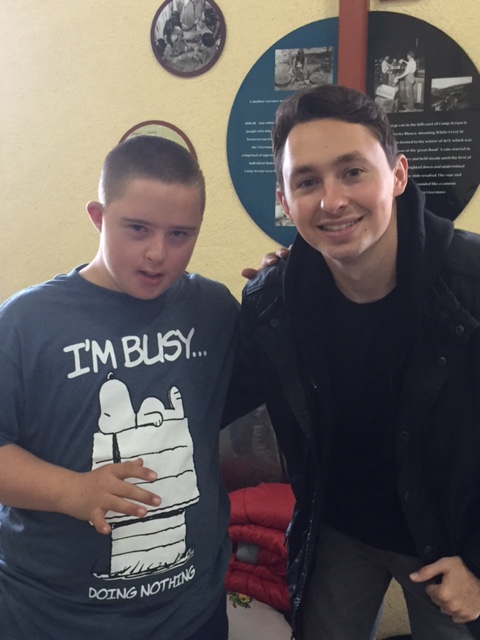
Fast forward to November 2015: My nearly 15-year-old son Christian (heretofore “C”) walked onto the grounds of Camp Arroyo for his first residential camp, a 2-night, 3-day stay only 40 minutes from home. He wasn’t at all terrified, but rather was ready to cut loose without Mom and Dad, fearless as always and eager for Mom to head home.

My wife, Sarah, had camped out most of one night the previous spring to get one of the last slots at the uber-popular Exceptional Needs Network (ENN) camp. After checking in, C met his personal camp counselor, the one and only Remington, who by then was one of the most experienced counselors there.

ENN Remington & C

Christian and Remington

“I volunteered that first summer and fell in love with it,” says Remington. “It really changed my perspective on kids with disabilities.” He’s worked every camp session (three per year) since that first one, and he plans to do it as long as he can. “It’s like a vacation for me. It resets me on what’s really important.” C now feels the same way, about the vacation part anyway.

A Little History

“When my son was young, I needed to find something for him to do outside of school, especially during the summer,” says Valerie Hund, one of the founding mothers of ENN and the current board president. There were no activities available in the Livermore area for kids on the autism spectrum, like Grayson, who need a level of structure and understanding that traditional programs don’t usually provide.

“At that time there was only one after-school program in the area for kids with special needs, but nothing during the summer,” she says. In 2001, she was introduced to another mother with similar concerns, and before long they had formed a small group that eventually became ENN.

They wanted to establish a camp to give the kids an opportunity to enjoy outdoor activities and, equally importantly, give the parents a well-deserved break. “That’s what is different about us,” says Laura Peters, ENN’s camp director. “The other special needs camps in this area are all family camps. Ours is a respite camp just for the kids. As important as it is for the kids to have their own experience, it is also very important that the parents get a break.”

By the next summer, the group had organized its first camp for a small group of children, mostly the children of board members and their friends.

They were fortunate to get access to Camp Arroyo, which the Taylor Family Foundation helped established in 2000 with the East Bay Regional Park District. Operated by YMCA of the East Bay, Camp Arroyo hosts a variety of camps for children with life-threatening and chronic illnesses, developmental disabilities, and youth-at-risk.

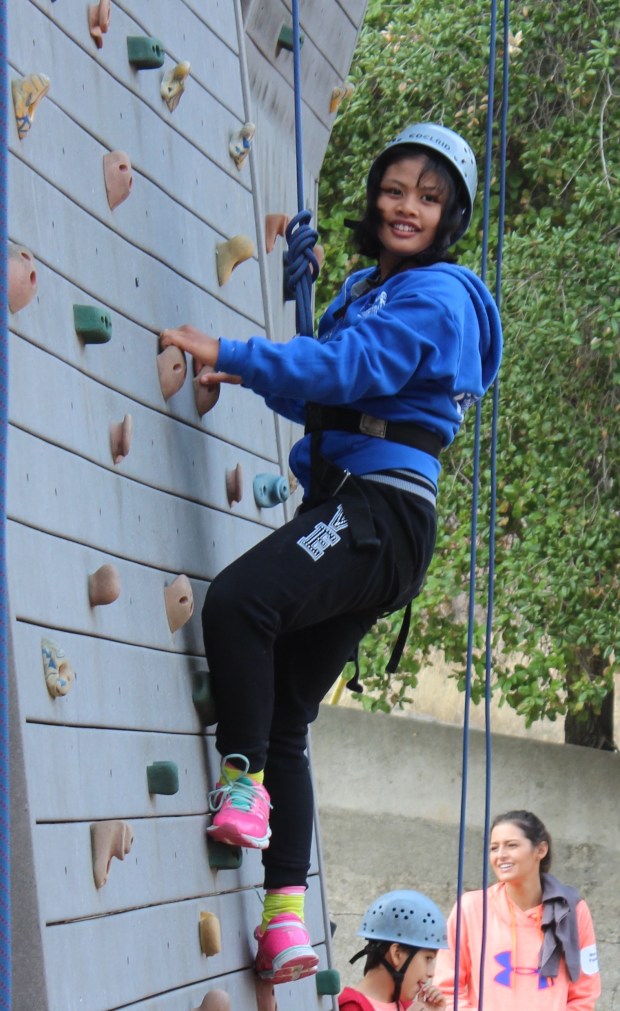
ENN climber

Chelsea tackles the climbing wall at Camp Arroyo.

An Awesome Camp Experience

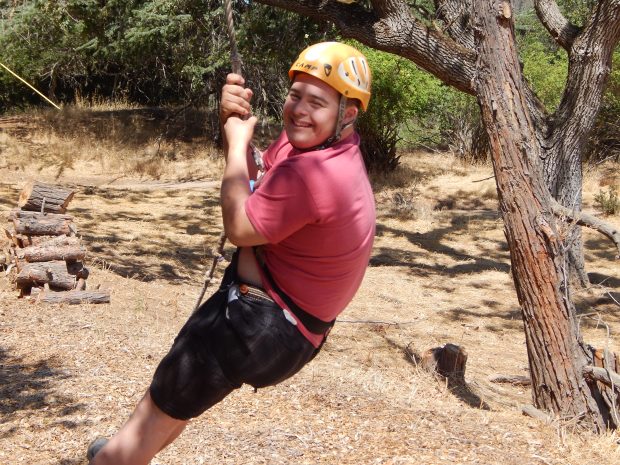
ENN has three camps there each year, two in summer and one in the fall. Campers take part in a wide variety of activities, regardless of their disability, including swimming, zip-lining, a climbing wall, arts and crafts, and other fun activities.

The 45 slots per session fill up quickly every spring, so if you’re not in line in the wee hours before sunrise on registration day, you might be out of luck.

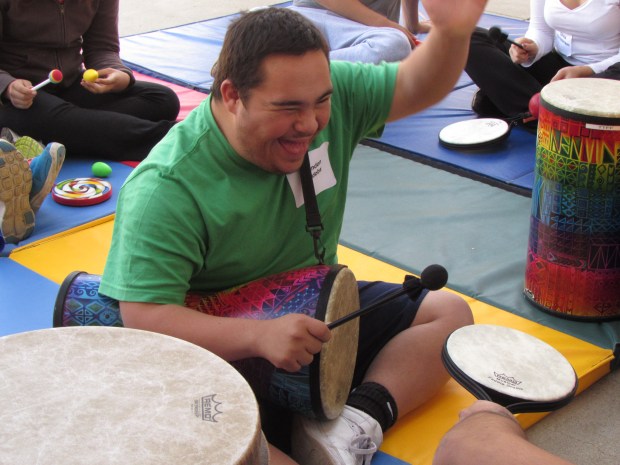
ENN drummer

Brandon keeps the beat.

Exceptional Staff

Remington’s experience is common, first volunteering as an activity aide until turning 18, then becoming a counselor, assigned to one camper for the duration of camp. It’s not 9-to-5, but around the clock from the time the camper arrives until he leaves 3 or 4 days later. And sleep is not guaranteed; ask Remington, who spent many late night hours with C in the aptly named “Up All Night” cabin.

“When I started (as a counselor), they gave me the easier kids,” he says. “Now that I’m more experienced, they often assign me kids that need a little extra help.” He made a strong connection with his very first camper, Ryan, who comes back every summer and requests Remington as his counselor. “He’s my buddy,” says Remington. “We talk throughout the year and even get together for lunch sometimes.”

The counselors are paid, but for most it is a labor of love. “We think it’s really important to have the best staff and we’ve done whatever we needed to do to be sure we could pay them,” says Valerie.

Making Ends Meet

“We rely a lot on fundraisers throughout the year, but a lot of that money dried up during the recession. At the end of our camps in 2009, many of the staff gave some or all of their pay back to help us stay afloat.”

While parents do pay a nominal registration fee, there is no fee to attend camp. To offset the $20,000-plus cost to operate each camp session, the all-volunteer ENN board conducts fundraisers throughout the year, individuals donate or raise funds specifically for ENN, and parents are encouraged to submit a request for funding to their Regional Center for their camp session.

And, of course, donations are always welcome.

ENN zipline

Josh flies on the zipline.

Making Memories

Each camp session ends with a talent show and awards ceremony with specific recognition for each camper. C earned “The Steph Curry Basketball Award” for his MVP-like moves and his deft touch with the roundball.

Sarah, along with the other parents, attended the final event, but, knowing that meant the end of camp, C did not hide his displeasure when he saw her.  As disappointed as he was to have to go home, he is now looking forward to his next camp, this time in the summer with the chance to swim, his second favorite activity after bowling.

Remington, who is a new college graduate and an aspiring children’s book author, will be back as well. “They say Disneyland is the happiest place on Earth, but I think it’s ENN camp. It’s special. It really is a wonderful place.”

head and shoulders


About me: I am Pete Resler, a dad of two boys with special needs. I created this blog to tell stories of exceptional people, including those with special needs and those who give of themselves to make life better for them. My hope is that these stories expose more people to what’s good in the special needs world and inspire them to give of themselves to make life better for those with special needs.
You can help:  I’m always looking for new ideas. If you know someone you think should be featured, shoot me a note at specialopstories@gmail.com.

Future Interruptus

Baby #1

One fall morning in 2000, I received a distress call from my wife who was expecting our first child. A “genetic counselor” had called with the news that a genetic test confirmed that our unborn baby had Down Syndrome. One extra chromosome sent our future into a hard left turn … across traffic … on two wheels … with its eyes closed.

I reacted by sitting silently, freaking out on the inside and wondering just how much our lives would change, or, more accurately, how what we expected life to be like as parents would change. Given the instinctual options of fight or flight, I chose fight. And to be effective I had to know my enemy… so I Googled it.

In hindsight, we feel very fortunate that we knew before he was born. We read all that we could, talked to other parents who went through what we were facing, and we were able to prepare ourselves. Equally important, we were able to prepare our family and friends, so no awkward silences when people visited us in the hospital, no “mongoloid” references from old Aunt Gert, and no grief. It was just as birth should be, filled with joy and celebration.

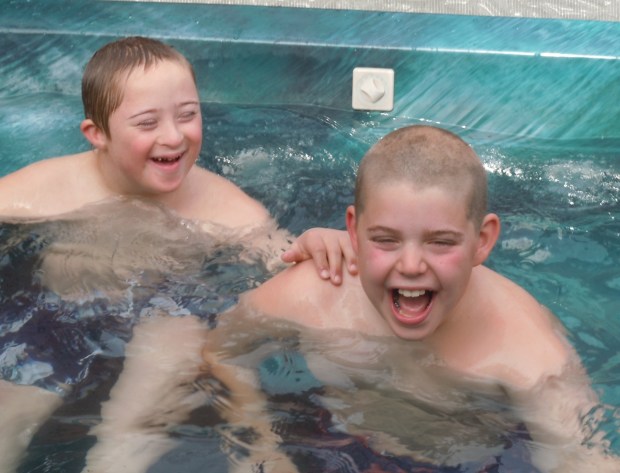
boys in hot tub

Baby #2

Benno came along 30 months later. We didn’t feel the need for genetic testing during that pregnancy. We had only one hope, that he would be healthy, and we felt fortunate that he was born healthy and “normal.” We settled into a fairly comfortable routine.

Warning: Never get too comfortable! It wasn’t long before both boys were diagnosed with autism. Now Mr. Future was in a barrel roll heading for the wall. Over the years, Ben’s list of diagnoses has expanded to include ADD, trichotillomania, and OCD (I know I’m forgetting one or two).  The one that is dominant changes from year to year, month to month, even hour to hour some days.

It’s a daily struggle for them and us, just like it is for every person and family living in the special needs world. Not only do we all deal with the boys’ various limitations, but we also deal with the limited understanding and acceptance of others. That said, things are much better today than they were in the past, when children with disabilities were hidden from the public or, worse, confined in institutions.

The Bright Side

The good news is that today every person, regardless of perceived capabilities, can achieve the unexpected and contribute to society in meaningful ways. By bringing those with the needs and desires, but not the capability, together with those with the capability and the desire to help, perceptions shift toward every person’s unique value, instead of their relative abilities.

This blog is my contribution to that effort. With every post I will share inspiring stories about people with special needs and those who give from their heart, mind and soul to make life better for them. My hope is that “Special Ops” will educate the uneducated, inspire the uninspired, and in some way contribute to the eventual death of “normal” as an adjective.

Follow Along

To stay up to date with the latest and greatest, you can subscribe to the blog by clicking the Follow box at the bottom of the right-hand column on this page, like the “Special Ops” Facebook page (https://www.facebook.com/specialopstories/), or follow the blog on Twitter (@specialopstory).

Thanks for reading. I look forward to sharing this journey with you.

About me: I am Pete Resler, a dad of two boys with special needs. I created thishead and shoulders blog to tell stories of incredibly good people, including those with special needs and those who give of themselves to make life better for them. My hope is that these stories expose more people to what’s good in the special needs world and inspire them to give of themselves to make life better for those with special needs.
You can help:  I’m always looking for new ideas. If you know someone you think should be featured, shoot me a note at specialopstories@gmail.com.