physical disability

Blind to Limits

On any given day, you might find Daniel Stickney surfing or scuba diving in the Pacific Ocean, participating in his college’s student government, or assisting engineers to make technology more accessible. He’s traveled the world and learned new languages. You could say the 22-year-old has a great life, that he holds the world in his hands.

The fact that he can hold anything in his hands is little short of a miracle, considering that shortly after his birth the doctors told Danny’s parents that he had cerebral palsy and would likely live his life in a fetal position.

“Daniel is a gift from God,” says his father, Dyer, a single parent who made it his mission to do whatever he could to help Danny live as independent a life as possible. Finding little help close to home, Dyer expanded that mission to other parts of the world in search of therapies that would prove the doctors wrong. Thanks to intense physical therapy at a young age, Danny is able to use his hands well enough to do many things others with his disability can’t.

Yes, I’m disabled, and…

Danny’s disabilities are merely conditions, hardly limitations. When I first sat down to talk with him and his older brother, Stanford, I asked Danny to tell me about his disabilities. He told me that he is legally blind due to cortical visual impairment, which limits his vision to a periodic sliver from the edge of his right eye.

I expected him to talk about his CP, so I prompted him for more. I got silence.

Stanford explained that Danny was raised without awareness of his disabilities. It wasn’t something he paid attention to until fairly recently. Stanford explained that their father refused to let any of the children’s limitations prevent them from participating fully in life. The focus is always on what each member of the family can do, not what they can’t. Never why, always why not.

Stanford then prompted Danny to talk about his CP, and Danny spoke briefly about his use of a wheelchair. He quickly shifted the conversation to how much he enjoys speaking with people in retirement homes to help them make their own transition to using a wheelchair. The more I tried to get him to talk about himself, the more he talked about how he loves helping others.

Danny is also a “big man on campus” at the College of Adaptive Arts in San Jose, where he takes classes and is vice president of the student government. When he’s not in school, he gives a lot of his time volunteering with various organizations. He is currently a board member for the California chapter of TASH, a disability advocacy organization, and was a featured speaker at its 2015 national conference.
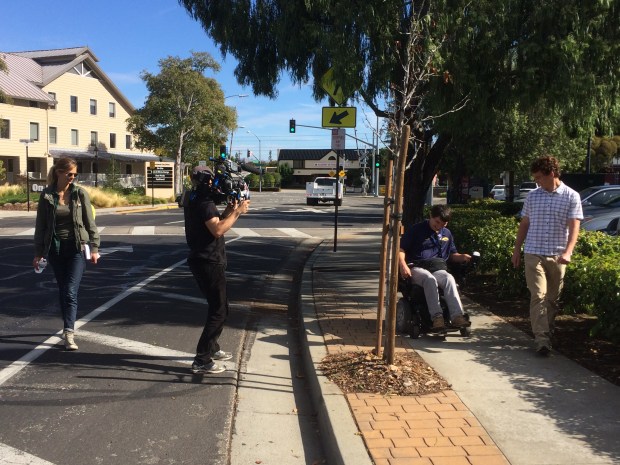
danny-filming

Danny navigates a sidewalk in Los Gatos, CA, during filming of “A Day with Danny” for the Google Accessibility Team.

Shaping tech access

Like any “millennial,” Danny loves technology. He and Stanford had the opportunity to hear Charles Chen of the Google Accessibility Team speak at the Vista Center Blind Expo in Palo Alto, CA, about the work the team was doing to make technology accessible to everyone. They chatted with Charles afterward and soon were meeting with the team and testing a variety of equipment and applications designed to help the visually impaired and people with limited or no fine motor skills access technology.

Danny was also featured in a Google Accessibility documentary called “A Day With Danny,” which was used internally and to promote the company’s Google Impact Challenge: Disabilities program, through which it is donating $20 million to 29 non-profits that are using technology to address a variety of accessibility challenges.

A better wheelchair

This summer I spent an afternoon at Danny’s home in Los Gatos, CA, to observe what Danny called a “Makeathon.” A group of young engineers and creative problem solvers lived with Danny and his family for a week to observe him and develop ways to help him in his daily life.
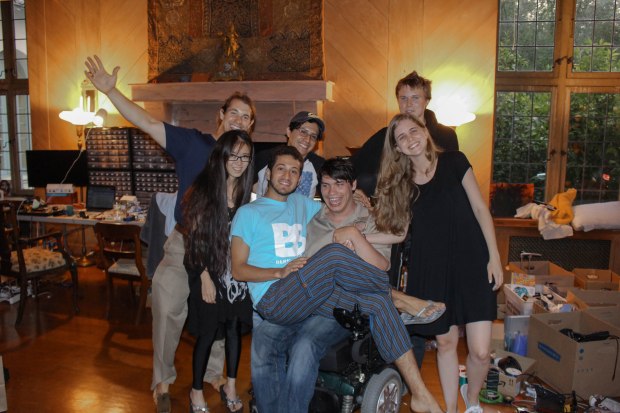
makeathon-group

Danny and his brother, Stanford (back row, left), take a break for a group photo with the “Makeathon” engineers.

By the time the group departed, Danny had a wheelchair equipped with infrared sensors that alert him to obstacles and dangers as he moves about. The engineers used existing technology to design a new type of detection system that alerts Danny when he nears stairs or other potential dangers. They will share what they learned in the open-source community in hopes that others will take their information and adapt it to solve other problems.

Two of the engineers, Stephanie Valencia and Tomas Vega, are co-founders of Assistive Labs, a “global team of dreamers and doers” working to “increase access to assistive devices for people living with disabilities in global markets by collaboratively building adapted and affordable devices” in the areas of health, education, communication, and mobility.

(I will be writing specifically about the “Makeathon” and Assistive Labs in a separate post, so stay tuned. And I hope to include video of me driving an early version of Danny’s retrofitted wheel chair. Too funny to miss!)

What’s next?

Danny views his future as limitless. He wants to continue his advocacy work for people with disabilities, particularly those who are visually impaired or who use a wheelchair. “I love to be involved in the community,” he says. “When I get a chance to help people with disabilities, I try to make life better for them.”

“I want to make it clear that even though I’m in a wheelchair I’m still a human being,” he says. “Anything I think I can do, I can do.”
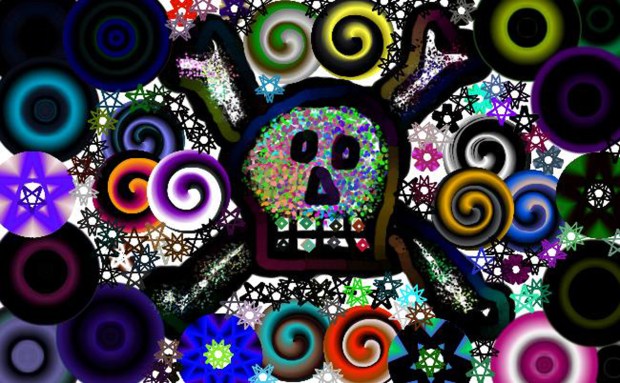
ArtThread Making a SPLASH! in Special Needs Community

I am a writer. I string words together to communicate information, persuade, amuse. I express my creativity by thoughtfully using language to paint vibrant pictures and performances in your mind, making you feel, think, react. It is my art. When I write I am filled with light.

For people with special needs, their ability to communicate, to express their feelings, to ask for help, to explore what is possible are often stymied by physical or mental limitations. Without an expressive outlet, their inner light is burdened by darkness. They can’t easily find a way out, so they may never become their best selves.

Art can be the switch that fills the darkness with light, and Jay Klein (founder and CEO) and Rob Rothschild (president) of the ArtThread Foundation, are making artistic expression easy and accessible with an online art program centered on a “digital Etch-A-Sketch” tool called SPLASH! And it is doing wonders for people of all ages who had been limited by their own minds, bodies, or environments.

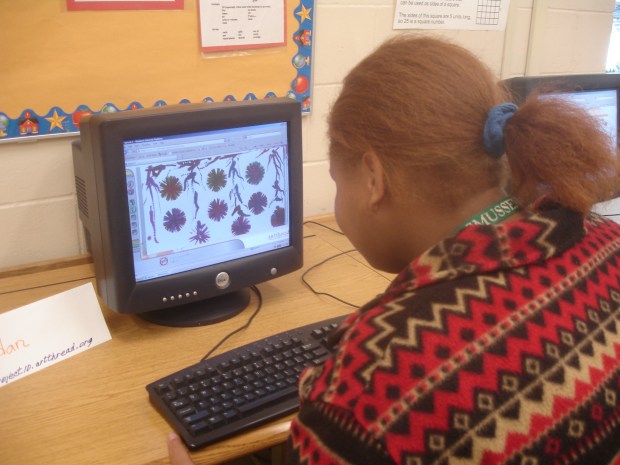
student

Try SPLASH! It’s free! Just set up an account and click “Create Art Online.”

“Our mission is to make art and creative expression more available to everyone, especially those impacted by social circumstance and physical limitations,” says Jay. Through the ArtThread Foundation, teachers are using SPLASH! in schools across the country to help children learn, express themselves, vent their frustrations, discover their creativity, and build self-esteem. “This is an adaptive technology that enhances success for students with disabilities,” says Jay.

The Power of Expression

Alonna had the opportunity to try SPLASH! when she was in her early 20s, shortly before aging out of the Florida school system. She lives with spina bifida, a spinal birth defect that affects her ability to walk and learn. She made it through high school in St. Petersburg and entered a transition program called Project 10 to prepare for living in the adult world. Project 10 is an ArtThread “pARTner” and uses the program to help students explore their artistic side.

“She really took to it in a special way,” says Rob Rothschild, president of ArtThread Foundation. Alonna was one of  a small group of Project 10 students who were selected to participate in Work of Art (WOA), an ArtThread program that teaches participants how to turn their love of art into an online business.

alonna_torres

Alonna in her SPLASH! studio

Developed in conjunction with VSA Florida and funded with a grant from The Able Trust, WOA helps students set up e-commerce businesses through which they can sell products featuring their original art. Through a custom portal to the online marketplace Zazzle, the artists create and sell shirts, coffee mugs, and other items featuring their work.


Rob showed Alonna how to set up and manage her store and design products on the Zazzle platform. “Alonna was very shy,” says Rob. “Learning how to create art and sell it in her own online store really boosted her confidence. She really took to it in a special way.”

“I love to paint and draw and be creative,” she wrote after launching her online store. “When I do art I am free from all the challenges that I face on a daily basis.”

How It Began

The initiating concept for ArtThread was born from Jay’s National Institute of Health, National Cancer Institute, and U.S. Department of Commerce funded research at the University of Florida. “I was studying the effects of artistic expression on symptom management in children undergoing cancer treatment,” says Jay. “I found that they had a better quality of life because they found meaning in the art. People who are more resilient have been able to attach positive meaning to their journey. That positivity displaces the negativity of their circumstance.”

“Then it dawned on me that it could help people with disabilities as well,” he says. “That’s when we came up with the idea to create the ArtThread Foundation as a way to develop the tools and partner with organizations that would benefit from it.”


“Any place there is no darkness there is light.”


Jay used the power of creative expression as a survivorship tool himself when he battled and beat cancer as a young man, and he is passionate about using technology and creative expression to foster self-esteem and community among children with disabilities, health challenges, and difficult social circumstances. The foundation partnered with Carnegie Mellon University to develop SPLASH! and the platform for the online art galleries.

Amazing Results

ArtThread has taken root in Florida with organizations serving people with special needs such as VSA and Project 10, and in Sonoma County, CA, with the Early Learning Institute. It is also used at the Shriners Hospital for Children in Tampa, FL, where young patients can create art with SPLASH!, providing a way to express themselves and bring light into their lives.

At VSA, Bonnie Hammer is a teaching artist implementing the program in schools in and around Sarasota, FL. Special education teachers apply for grants through VSA to implement an 8-week program. At the start of each program, she works with the teacher to use the online art tools to enhance the curriculum, whether it’s learning colors and shapes, combining shapes to build things, or learning math and science.

“It’s like a giant coloring book,” says Bonnie. “Once the students see me using it, they get very excited and want to try it.” The program also helps students develop fine motor skills and can help students focus, relax, and express their feelings. “I’ve even used the program with young offenders in a juvenile prison,” she says. “They have a lot of anger and other issues, and through the creative process they’re able to work through them.”

wow

ArtThread opens limitless possibilities for people of all abilities.

Karen Holtman tested ArtThread with kindergarten students at John B. Riebli Elementary School in Santa Rosa, CA. “Jay asked me to collect data to document how effective the program was with 5-year-olds. It had only been used with older children and adults, so he was skeptical it would be successful.”

“It was extremely popular with the kids,” says Karen. ArtThread provided the hardware for three SPLASH! stations in her classroom! She used it to teach the children colors, shapes and patterns. She paired them up and had them copy what one another created, teaching them how to work together. “It really helped lay the foundation for using technology in a fun way.”

Turn on the Light

Jay and Rob would love to see ArtThread in every school, particularly those that have eliminated the arts because of budget constraints, so students can use art to discover their abilities and unlock their full potential.

“When you remove art, you remove not only an individual’s ability to express himself, but you also remove a society’s ability to express itself,” says Jay. “Creativity is a key part of our wellness.”

If you would like to begin a program in your school or organization, contact ArtThread to become a “pARTner.”

You will be amazed at how quickly the light chases away the darkness.

About me: I am Pete Resler, a dad of two boys with special head and shouldersneeds. I created this blog to tell stories of exceptional people, including those with special needs and those who give of themselves to make life better for them. My hope is that these stories expose more people to what’s good in the special needs world and inspire them to give of themselves to make life better for those with special needs.
You can help:  I’m always looking for new ideas. If you know someone you think should be featured, shoot me a note at specialopstories@gmail.com.

Unique Vision

Little Earl Rivard wasn’t expected to survive. The 4-month-old had been in a coma for a week after the vehicle in which he rode was hit by a drunk driver. He would awaken and he would live, but the damage was irreversible. Fortunately for Earl, now an adult, he was too young to have memories of the accident or what it was like to see.

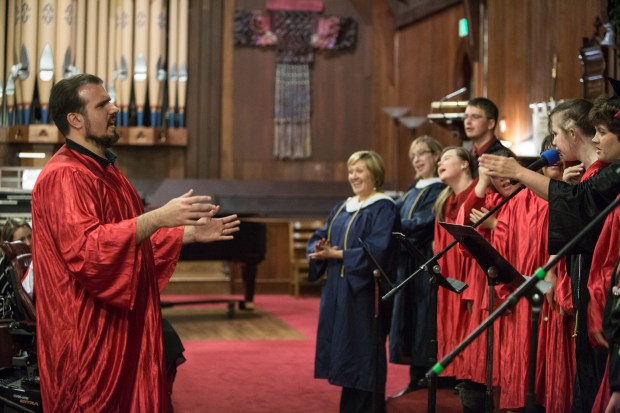
Today his students don’t care that he is blind. To them, he is a caring, talented teacher who helps them read, helps them sing, and helps them achieve what others assumed they would never achieve. Like Earl, his students have unique abilities. And, like Earl, they want to make the most of those abilities and do what they love.

Rivard_chorus

Earl Rivard leads the College of Adaptive Arts concert choir during the 2015 graduation ceremony. (Photo by Linda Krakow Eaman)

Sheltered success

Earl grew up like most other kids. He attended a public school that had a program for blind students in a nearby community, attending regular classes and getting help with adaptive skills such as Braille. He was very active in drama and music, and even played some sports. He excelled academically and attended the University of California – Berkeley, graduating in 2001.

As he grew, he learned what he needed to get along, and he was provided various required accommodations in the classroom to insure he had the same access to education as his peers. But, as an adult, he found that the real world wasn’t so accommodating. “The road got a lot bumpier after college,” he says. “I really didn’t have a sense of what it’s like going through life with a disability, without the supports I had growing up.”

He tried to find work, but he soon learned that his ethnic studies degree wasn’t going to put food on the table. He had crossed the stage at UC – Berkeley graduation and hit a wall. He had to find a way to make a living, a way that minimized or negated his disability. Music seemed to be the logical choice.

Breaking through

“Music was always in the background of my life,” Earl says. His father played the guitar and had a collection of vinyl LPs that provided the soundtrack.

At 14, his family moved to Argentina, his mother’s homeland, for a year. Music is a rich part of that culture, he says, and the spontaneous, participative playing and singing sparked his passion. He’d always enjoyed singing, but something changed for him there. “It was during that year that I found the joy of performance,” he says.

Back in California, Earl got involved in high school musical theater and taught himself to play guitar. In college he sang in an acapella group. So when he had to find a way to put food on the table, he grabbed his guitar and started stumping for gigs.

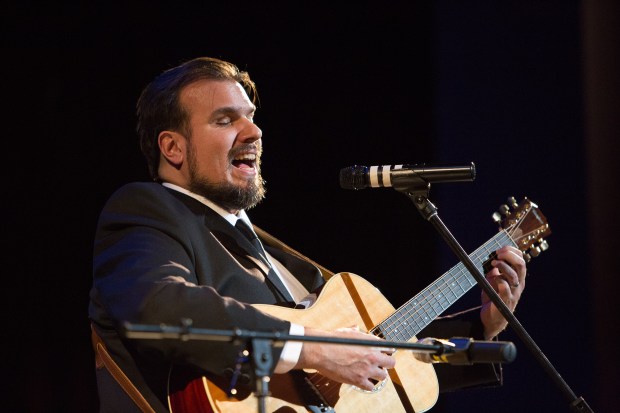
He did well, performing often and recording three solo albums (“Troubadour Blue” and “Underground Railroad” are available online), collaborating on several others. He’s written some of his own songs and co-wrote others with his father. “My dad is really the songwriter in our family, and many of the songs I have recorded are his.”

While he enjoyed his chosen career, it was physically and emotionally draining. “I love performing for people,” he says, “but I never knew where the next gig would come from.”

Earl Rivard - CAA performance

Rivard’s love of performance shines on stage and inspires his students. (Photo by Linda Krakow Eaman)

Spreading his wings

Little did he know that his next gig would take him down a very different path. His scheduled had slowed enough that he agreed to help produce a musical program at a day program for disabled adults called Futures Explored in Lafayette, CA, where a friend was working.

It worked out so well that they asked him to teach a music class. It quickly grew from once a week to several days a week and suddenly he was a teacher. “It was the closest thing I’d ever had to a real day job,” he says with a chuckle. “I found real joy working with these special people.”

He also got married and moved to San Jose, adding a lengthy work commute to his daily schedule. It quickly became apparent that he no longer had time for performing, so he put that chapter of his life on hold.

He also started looking for a teaching opportunity closer to home and found The College of Adaptive Arts (CAA), an innovative school where adults with disabilities can explore and learn a variety of artistic and educational disciplines, much like a traditional college. (Read my blog about CAA here.)

“It’s very joyful, very rewarding, and very surprising,” he says. “I love what a supportive environment CAA provides,” says Earl. “It’s a deeply human place.”

Earl leads the concert choir and teaches Music Appreciation. He also assists with a variety of other courses and program, such as music recording, poetry, public speaking, and the student council.

“We’re going to ask you to spread your wings and grow, but we meet you where you are,” he says, offering the Reading Partners class as an example. “The students read to one another based on their level. One person might read three paragraphs, while another might read five words. Regardless of their ability, we always ask them to do a little bit more each time, and we celebrate their success.”

“I get profound joy and satisfaction teaching people where they are and celebrating their accomplishments.”

Rivard_showcase

Rivard performs during a CAA Staff Showcase. (Photo by Linda Krakow Eaman)

Once a performer…

While Earl loves sharing his passion for learning and music with his students, he is still drawn to the stage. He hopes to return to performing; he just needs to figure out how he can fit it into his life again.

He loves the troubadour style of musical storytelling, just a man and his guitar. “It creates a beautiful give and take with your audience.”

“My dream would be to find a way to reach a large audience with the interweaving of storytelling and music. I trust that at some point it will come together.”

head and shoulders

About me: I am Pete Resler, a dad of two boys with special needs. I created this blog to tell stories of exceptional people, including those with special needs and those who give of themselves to make life better for them. My hope is that these stories expose more people to what’s good in the special needs world and inspire them to give of themselves to make life better for those with special needs.

You can help:  I’m always looking for new ideas. If you know someone you think should be featured, shoot me a note at specialopstories@gmail.com.

ENN: An Exceptional Experience

In the summer of 2007, 15-year-old Remington Fox walked onto the grounds of Camp Arroyo near Livermore, CA, literally terrified of what he was walking toward. His mother had nudged him to volunteer at a camp for youths with special needs and he was not happy about it.

“My parents heard that this camp was looking for volunteers, so my mom got me an interview. I wasn’t interested at all. I was really intimidated. I didn’t know anything about people with special needs,” he says. “But they thought it would be good for me, so I did it.”

Fast forward to November 2015: My nearly 15-year-old son Christian (heretofore “C”) walked onto the grounds of Camp Arroyo for his first residential camp, a 2-night, 3-day stay only 40 minutes from home. He wasn’t at all terrified, but rather was ready to cut loose without Mom and Dad, fearless as always and eager for Mom to head home.

My wife, Sarah, had camped out most of one night the previous spring to get one of the last slots at the uber-popular Exceptional Needs Network (ENN) camp. After checking in, C met his personal camp counselor, the one and only Remington, who by then was one of the most experienced counselors there.

ENN Remington & C

Christian and Remington

“I volunteered that first summer and fell in love with it,” says Remington. “It really changed my perspective on kids with disabilities.” He’s worked every camp session (three per year) since that first one, and he plans to do it as long as he can. “It’s like a vacation for me. It resets me on what’s really important.” C now feels the same way, about the vacation part anyway.

A Little History

“When my son was young, I needed to find something for him to do outside of school, especially during the summer,” says Valerie Hund, one of the founding mothers of ENN and the current board president. There were no activities available in the Livermore area for kids on the autism spectrum, like Grayson, who need a level of structure and understanding that traditional programs don’t usually provide.

“At that time there was only one after-school program in the area for kids with special needs, but nothing during the summer,” she says. In 2001, she was introduced to another mother with similar concerns, and before long they had formed a small group that eventually became ENN.

They wanted to establish a camp to give the kids an opportunity to enjoy outdoor activities and, equally importantly, give the parents a well-deserved break. “That’s what is different about us,” says Laura Peters, ENN’s camp director. “The other special needs camps in this area are all family camps. Ours is a respite camp just for the kids. As important as it is for the kids to have their own experience, it is also very important that the parents get a break.”

By the next summer, the group had organized its first camp for a small group of children, mostly the children of board members and their friends.

They were fortunate to get access to Camp Arroyo, which the Taylor Family Foundation helped established in 2000 with the East Bay Regional Park District. Operated by YMCA of the East Bay, Camp Arroyo hosts a variety of camps for children with life-threatening and chronic illnesses, developmental disabilities, and youth-at-risk.

ENN climber

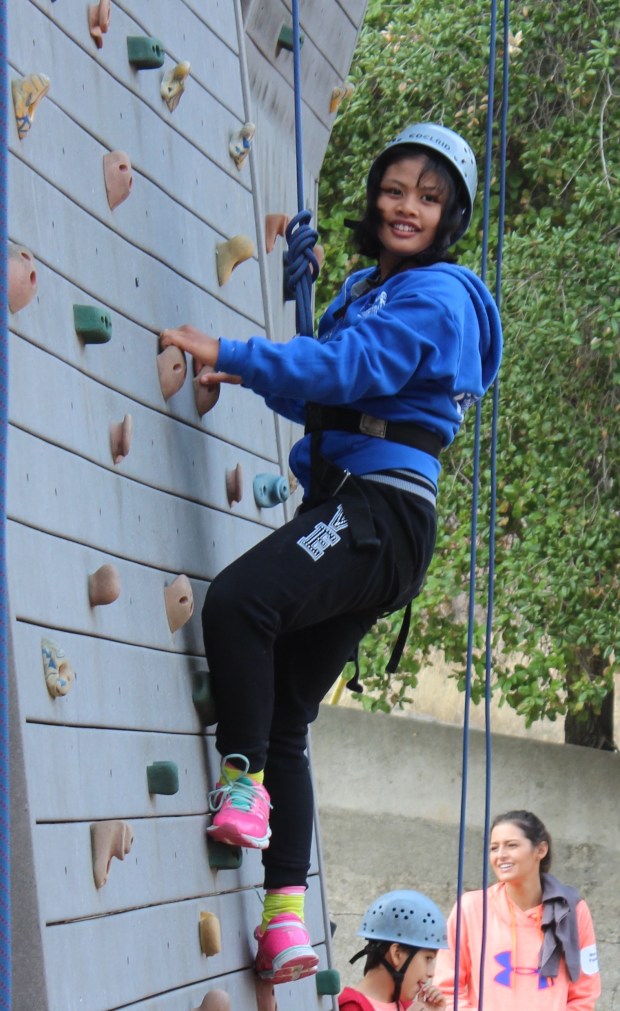
Chelsea tackles the climbing wall at Camp Arroyo.

An Awesome Camp Experience

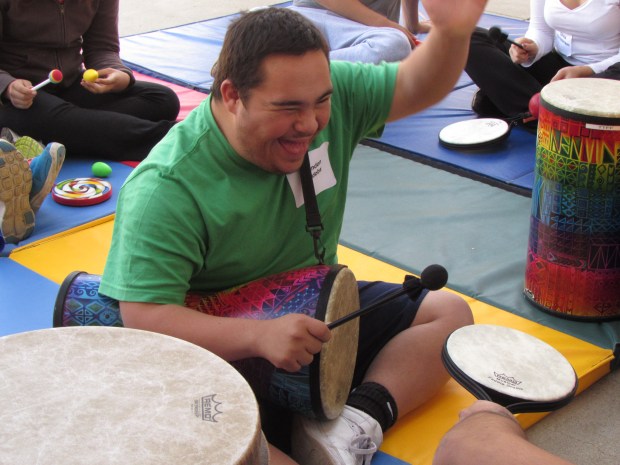
ENN has three camps there each year, two in summer and one in the fall. Campers take part in a wide variety of activities, regardless of their disability, including swimming, zip-lining, a climbing wall, arts and crafts, and other fun activities.

The 45 slots per session fill up quickly every spring, so if you’re not in line in the wee hours before sunrise on registration day, you might be out of luck.

ENN drummer

Brandon keeps the beat.

Exceptional Staff

Remington’s experience is common, first volunteering as an activity aide until turning 18, then becoming a counselor, assigned to one camper for the duration of camp. It’s not 9-to-5, but around the clock from the time the camper arrives until he leaves 3 or 4 days later. And sleep is not guaranteed; ask Remington, who spent many late night hours with C in the aptly named “Up All Night” cabin.

“When I started (as a counselor), they gave me the easier kids,” he says. “Now that I’m more experienced, they often assign me kids that need a little extra help.” He made a strong connection with his very first camper, Ryan, who comes back every summer and requests Remington as his counselor. “He’s my buddy,” says Remington. “We talk throughout the year and even get together for lunch sometimes.”

The counselors are paid, but for most it is a labor of love. “We think it’s really important to have the best staff and we’ve done whatever we needed to do to be sure we could pay them,” says Valerie.

Making Ends Meet

“We rely a lot on fundraisers throughout the year, but a lot of that money dried up during the recession. At the end of our camps in 2009, many of the staff gave some or all of their pay back to help us stay afloat.”

While parents do pay a nominal registration fee, there is no fee to attend camp. To offset the $20,000-plus cost to operate each camp session, the all-volunteer ENN board conducts fundraisers throughout the year, individuals donate or raise funds specifically for ENN, and parents are encouraged to submit a request for funding to their Regional Center for their camp session.

And, of course, donations are always welcome.

ENN zipline

Josh flies on the zipline.

Making Memories

Each camp session ends with a talent show and awards ceremony with specific recognition for each camper. C earned “The Steph Curry Basketball Award” for his MVP-like moves and his deft touch with the roundball.

Sarah, along with the other parents, attended the final event, but, knowing that meant the end of camp, C did not hide his displeasure when he saw her.  As disappointed as he was to have to go home, he is now looking forward to his next camp, this time in the summer with the chance to swim, his second favorite activity after bowling.

Remington, who is a new college graduate and an aspiring children’s book author, will be back as well. “They say Disneyland is the happiest place on Earth, but I think it’s ENN camp. It’s special. It really is a wonderful place.”

head and shoulders


About me: I am Pete Resler, a dad of two boys with special needs. I created this blog to tell stories of exceptional people, including those with special needs and those who give of themselves to make life better for them. My hope is that these stories expose more people to what’s good in the special needs world and inspire them to give of themselves to make life better for those with special needs.
You can help:  I’m always looking for new ideas. If you know someone you think should be featured, shoot me a note at specialopstories@gmail.com.

Pigeon Holes are for Pigeons

Michael Criscione was destined to contribute to society as a vending machine attendant, or at least that’s what a government bureaucrat thought he should do. And maybe for others living with spinal muscular atrophy (SMA) that would be just fine, but Michael is not typical.

“I wanted to do something that makes a difference,” said the 33-year-old when we met in Lafayette, CA, to chat and have a beer.

Allow me to put the scene in perspective: When I said we enjoyed a beer, we did, just in our own ways. I drank mine the usual way, while Michael’s attendant poured his directly into his stomach via a port in his abdomen.

Body breakdown

You see, Michael can’t swallow because the muscles that control that process no longer function properly, much like most of the voluntary muscles in his body, including those that help him breathe. SMA is a genetic disorder that results in muscular deterioration and impaired mobility. Michael has Type 2; Type 1 is the most severe. It is a progressive disorder that cripples more and more over time.

He’s in a wheel chair, his movement is very limited, and he has difficulty speaking clearly. His attendant, Christian, had to interpret much of what he said during our discussion. A BiPAP machine aids his breathing. Despite his physical limitations, Michael lives in his own place, but he does require assistance 24/7.

While his body is greatly affected, his brain and his motivation are fully functional. So when the bureaucrat pressed him to do the vending machine work, it’s understandable why Michael felt insulted.

Michael Criscione

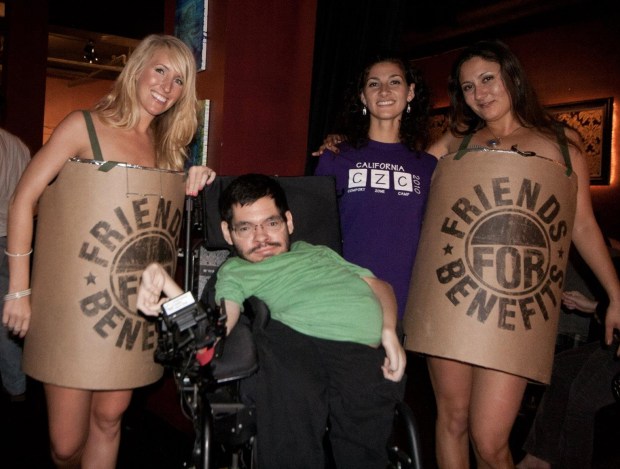
Michael Criscione, flanked by Friends for Benefits Barrel Girls Savannah Gray (left) and Pilar Fox, with friend Kim Masdeo

Making his own way

After finishing high school, Michael studied film at the University of California at Berkeley. During that time he started an indie rock band called the Pied Paupers with some of his attendants who were musicians. Michael was the manager, booking shows and getting them some local radio play.

He took his first job as head of fundraising for a non-profit run by a high school friend. He tapped his music network to begin producing concerts for the charity, but the organization eventually folded.

He took that experience and started Friends for Benefits, a non-profit that helps other non-profits by producing fundraising events primarily in the San Francisco Bay area. “I found that most non-profits are great at whatever their mission is, but most of them have no idea how to fundraise,” he said. “There is definitely a need for what I’m doing.”

Since his first music benefit event under Friends for Benefits in 2012, he has organized more than 10 events, more recently focusing on other different genres that bring in more money for the charities. Michael is the organizer, and others help with the details, such as event operations and finance.

With a fully charged wheelchair and an attendant at his side, Michael is constantly prospecting for future events by meeting entertainers and other celebrities at public events around the Bay area, such as shows, fan conventions, and book signings.

Bigger and better

In January, comedian and character actor David Cross (Tobias Fünke on “Arrested Development”) performed his “Making America Great Again” stand-up show at Davies Symphony Hall in San Francisco. Cross generously donated a portion of the proceeds from the evening to Friends for Benefits.

The next event will be “Call Me Lucky: An Evening with Bobcat Goldthwait” (yes, children of the ’80s, that Bobcat Goldthwait) on May 27, 2016, at the Roxie Theater in San Francisco. It will be a screening of “Call Me Lucky”, a documentary directed by Goldthwait about comedian Barry Crimmins, followed by a Q&A.

“We’re not fully established yet,” said Michael, “but we’re doing bigger and better things.” Several other events are being planned, but his dream is to create a week-long arts festival, with a variety of events benefitting several charities. “I want to get Friends for Benefits to a point where we are doing measurable good and I can be fully independent, with no assistance from the government.”

And how likely would that be if he was looking after vending machines?

About me: I am Pete Resler, a dad of two boys with special needs. I created this blog thead and shoulderso tell stories of incredibly good people, including those with special needs and those who give of themselves to make life better for them. My hope is that these stories expose more people to what’s good in the special needs world and inspire them to give of themselves to make life better for those with special needs.
You can help:  I’m always looking for new ideas. If you know someone you think should be featured, shoot me a note at specialopstories@gmail.com.