In the summer of 2007, 15-year-old Remington Fox walked onto the grounds of Camp Arroyo near Livermore, CA, literally terrified of what he was walking toward. His mother had nudged him to volunteer at a camp for youths with special needs and he was not happy about it.
“My parents heard that this camp was looking for volunteers, so my mom got me an interview. I wasn’t interested at all. I was really intimidated. I didn’t know anything about people with special needs,” he says. “But they thought it would be good for me, so I did it.”
Fast forward to November 2015: My nearly 15-year-old son Christian (heretofore “C”) walked onto the grounds of Camp Arroyo for his first residential camp, a 2-night, 3-day stay only 40 minutes from home. He wasn’t at all terrified, but rather was ready to cut loose without Mom and Dad, fearless as always and eager for Mom to head home.
My wife, Sarah, had camped out most of one night the previous spring to get one of the last slots at the uber-popular Exceptional Needs Network (ENN) camp. After checking in, C met his personal camp counselor, the one and only Remington, who by then was one of the most experienced counselors there.
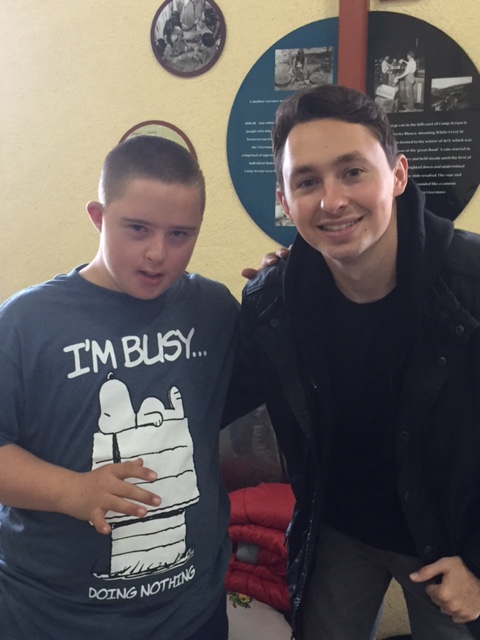
Christian and Remington
“I volunteered that first summer and fell in love with it,” says Remington. “It really changed my perspective on kids with disabilities.” He’s worked every camp session (three per year) since that first one, and he plans to do it as long as he can. “It’s like a vacation for me. It resets me on what’s really important.” C now feels the same way, about the vacation part anyway.
A Little History
“When my son was young, I needed to find something for him to do outside of school, especially during the summer,” says Valerie Hund, one of the founding mothers of ENN and the current board president. There were no activities available in the Livermore area for kids on the autism spectrum, like Grayson, who need a level of structure and understanding that traditional programs don’t usually provide.
“At that time there was only one after-school program in the area for kids with special needs, but nothing during the summer,” she says. In 2001, she was introduced to another mother with similar concerns, and before long they had formed a small group that eventually became ENN.
They wanted to establish a camp to give the kids an opportunity to enjoy outdoor activities and, equally importantly, give the parents a well-deserved break. “That’s what is different about us,” says Laura Peters, ENN’s camp director. “The other special needs camps in this area are all family camps. Ours is a respite camp just for the kids. As important as it is for the kids to have their own experience, it is also very important that the parents get a break.”
By the next summer, the group had organized its first camp for a small group of children, mostly the children of board members and their friends.
They were fortunate to get access to Camp Arroyo, which the Taylor Family Foundation helped established in 2000 with the East Bay Regional Park District. Operated by YMCA of the East Bay, Camp Arroyo hosts a variety of camps for children with life-threatening and chronic illnesses, developmental disabilities, and youth-at-risk.
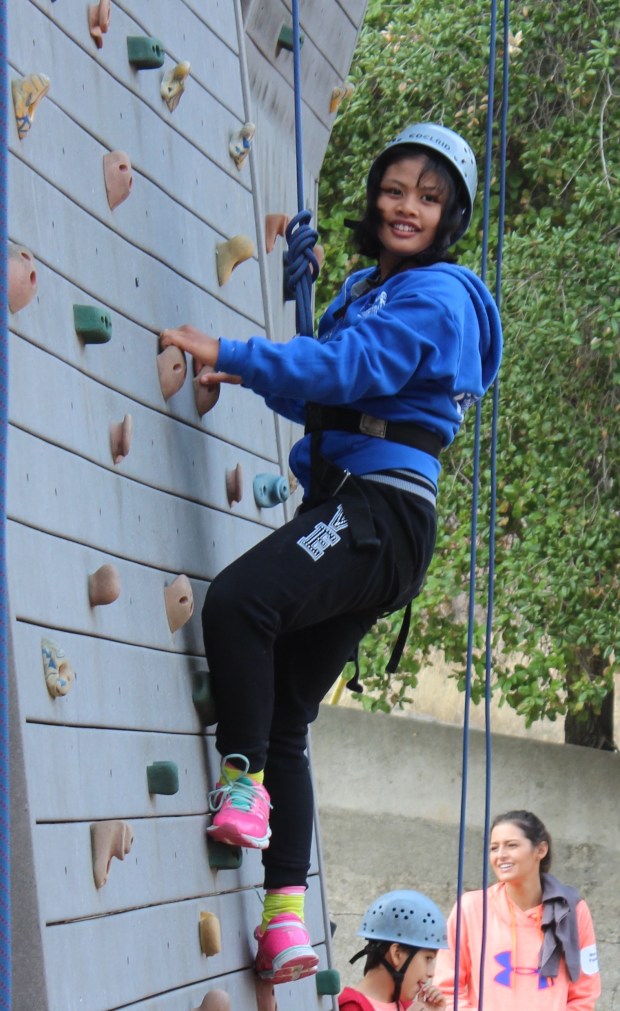
Chelsea tackles the climbing wall at Camp Arroyo.
An Awesome Camp Experience
ENN has three camps there each year, two in summer and one in the fall. Campers take part in a wide variety of activities, regardless of their disability, including swimming, zip-lining, a climbing wall, arts and crafts, and other fun activities.
The 45 slots per session fill up quickly every spring, so if you’re not in line in the wee hours before sunrise on registration day, you might be out of luck.
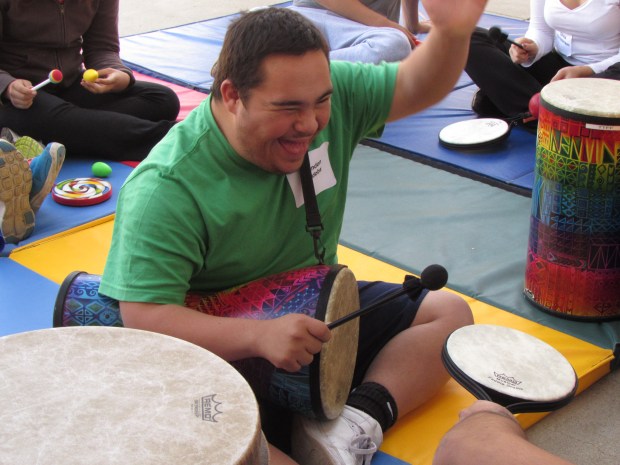
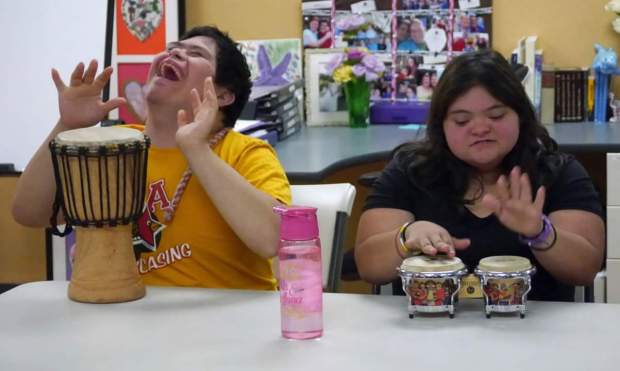
Brandon keeps the beat.
Exceptional Staff
Remington’s experience is common, first volunteering as an activity aide until turning 18, then becoming a counselor, assigned to one camper for the duration of camp. It’s not 9-to-5, but around the clock from the time the camper arrives until he leaves 3 or 4 days later. And sleep is not guaranteed; ask Remington, who spent many late night hours with C in the aptly named “Up All Night” cabin.
“When I started (as a counselor), they gave me the easier kids,” he says. “Now that I’m more experienced, they often assign me kids that need a little extra help.” He made a strong connection with his very first camper, Ryan, who comes back every summer and requests Remington as his counselor. “He’s my buddy,” says Remington. “We talk throughout the year and even get together for lunch sometimes.”
The counselors are paid, but for most it is a labor of love. “We think it’s really important to have the best staff and we’ve done whatever we needed to do to be sure we could pay them,” says Valerie.
Making Ends Meet
“We rely a lot on fundraisers throughout the year, but a lot of that money dried up during the recession. At the end of our camps in 2009, many of the staff gave some or all of their pay back to help us stay afloat.”
While parents do pay a nominal registration fee, there is no fee to attend camp. To offset the $20,000-plus cost to operate each camp session, the all-volunteer ENN board conducts fundraisers throughout the year, individuals donate or raise funds specifically for ENN, and parents are encouraged to submit a request for funding to their Regional Center for their camp session.
And, of course, donations are always welcome.
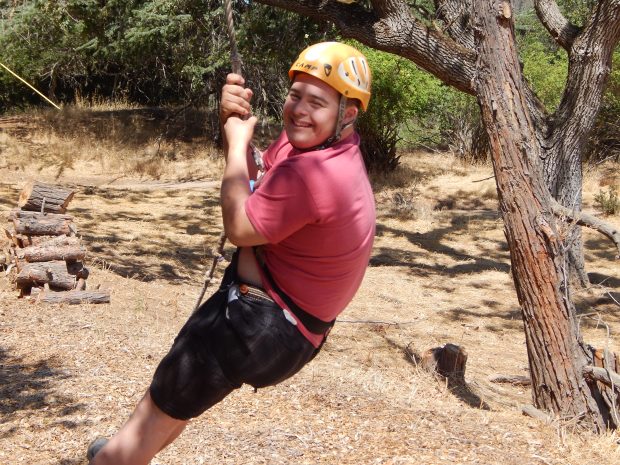
Josh flies on the zipline.
Making Memories
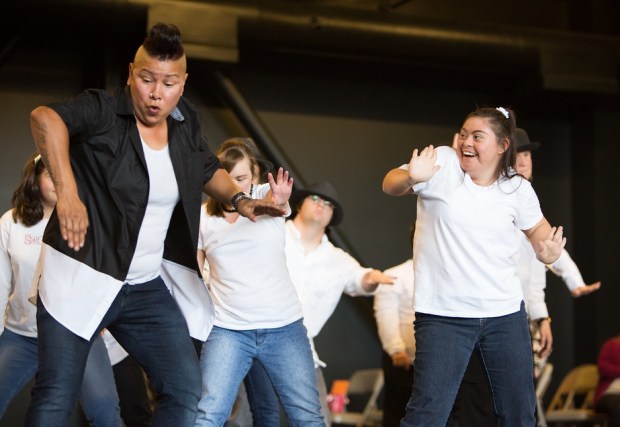
Each camp session ends with a talent show and awards ceremony with specific recognition for each camper. C earned “The Steph Curry Basketball Award” for his MVP-like moves and his deft touch with the roundball.
Sarah, along with the other parents, attended the final event, but, knowing that meant the end of camp, C did not hide his displeasure when he saw her. As disappointed as he was to have to go home, he is now looking forward to his next camp, this time in the summer with the chance to swim, his second favorite activity after bowling.
Remington, who is a new college graduate and an aspiring children’s book author, will be back as well. “They say Disneyland is the happiest place on Earth, but I think it’s ENN camp. It’s special. It really is a wonderful place.”

About me: I am Pete Resler, a dad of two boys with special needs. I created this blog to tell stories of exceptional people, including those with special needs and those who give of themselves to make life better for them. My hope is that these stories expose more people to what’s good in the special needs world and inspire them to give of themselves to make life better for those with special needs.
You can help: I’m always looking for new ideas. If you know someone you think should be featured, shoot me a note at specialopstories@gmail.com.
 incredibly good people, including those with special needs and those who give of themselves to make life better for them. My hope is that these stories expose more people to what’s good in the special needs world and inspire them to give of themselves to make life better for those with special needs.
 Special Ops