developmental disability

Instinct to Serve: CCI Dogs Transform Special Lives

Jacob and Yerba are best friends. When they met three years ago, Yerba was immediately drawn to Jacob. Jacob knew it, too, when Yerba rolled on her back and licked his face.

As I’m sure you’ve guessed, Yerba and Jacob are no ordinary couple. Jacob is a 14-year-old boy living with autism and cerebral palsy and Yerba is a yellow Labrador retriever carefully bred and trained to help Jacob navigate the life that is often so scary and confusing for him.

CCI_family

CCI skilled companion dog Yerba licks Jacob’s ear as they snuggle with Jacob’s mom, Candice, at home.

Their story began in 2012 when Jacob and his mother, Candice, went to a local park. There they met a young girl with Down syndrome and autism who had a “skilled companion” dog provided free by Canine Companions for Independence (CCI).

After researching CCI, Candice applied for a dog for Jacob, hoping it would help him with his anxiety and other social challenges. Nearly two years later, Jacob and Yerba met and their friendship has made an amazing difference for Jacob.

“He’s gained so much independence since he got her,” says Candice. “She knows her role and can sense when he needs her.”

Navigating life together

Jacob transitioned from elementary to middle school just a few weeks after he got Yerba. Stressful for even the most socially skilled 11-year-old, the move was scary and intimidating for Jacob. With Yerba at his side he was able to integrate much more easily. “After the first week, the other kids knew Jacob and Yerba by name,” says Candice, noting that people are curious about Yerba, who wears a special vest. Jacob has learned to answer strangers’ questions about her, building his confidence.

That extra attention can, however, be too much for him at times. Candice recalled a reunion with the person who raised Yerba as a puppy. The gathering with multiple dogs drew a crowd, and Jacob immediately became anxious and withdrew. Yerba sensed his anxiety and instinctively went to him, calming him and shielding him from the crowd.

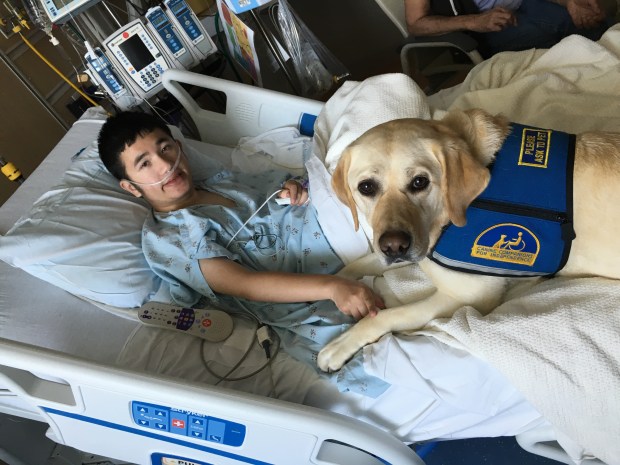
She also recalled how helpful Yerba was when Jacob was hospitalized for pneumonia. Jacob’s grandmother brought Yerba along to the hospital when she visited him, keeping him calm so he could use his energy to heal. “He sits next to Yerba and puts his hand on her. It really calms him,” says Candice.
Yerba_hospital_CCI

Yerba is always there for Jacob, even when he must be hospitalized for pneumonia.

Power to help

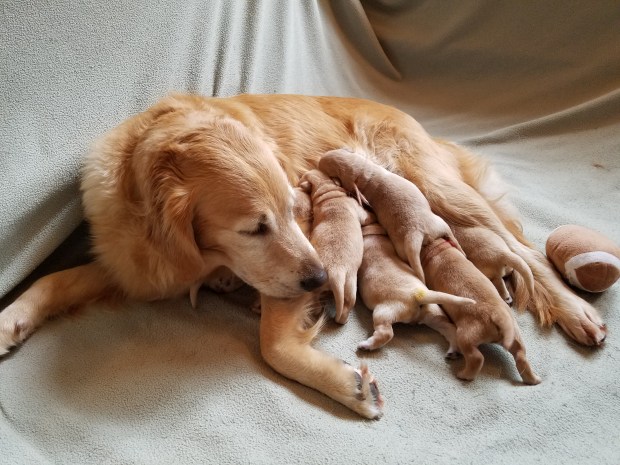
I was introduced to the CCI way by Sharon Mosbaugh, a volunteer “breeder caretaker” in Danville, CA. Sharon takes care of Salinas, a female breeder dog, and tends her litters. Sharon introduced me to Salinas and her litter of five pups, just days old. Sharon cares for them for their first eight weeks, when they are sent to volunteer “puppy raisers” who provide care and socialization and teach them basic obedience skills for the next 16-18 months.

I got to hold one of the tiny pups and couldn’t understand how Sharon could care for litter after litter and then let them all go. “How can I not give them up?” she asked. “When you see the power they have to help others, it’s really magical.”

At 18-20 months, the young dogs are sent to one of six regional training centers across the U.S. where they receive extensive training to serve in one of four specialized roles:

  • Service dogs, who assist adults with disabilities by performing daily tasks
  • Hearing dogs, who alert their partners, who are deaf or hard of hearing, to important sounds
  • Facility dogs, who work with clients with special needs at places such as schools, court houses, and hospitals, and
  • Skilled companions, like Yerba, who enhance independence for children and adults with physical, cognitive, and developmental disabilities
Salinas_litter_CCI

CCI breeder dog Salinas quietly nurses her pups just days after they were born in the home of breeder caretaker Sharon Mosbaugh.

Science and service meet at CCI

Sharon explained that breeder dogs, like Salinas, are the best of the best in terms of temperament and other traits required to provide the services clients require. All breeding occurs within 90 miles of CCI headquarters in Santa Rosa, CA, to maintain the control and consistency so important to the process.

Since its beginnings in 1975, CCI has placed more than 5,000 dogs across the U.S. Many more have been born into the program, but not all are cut out for the work ahead. “They won’t send a dog out to work unless they are absolutely certain of what it will do,” says Sharon.

She says that CCI is closely involved in every stage of the dog’s life to be certain it receives quality care and provides quality service. When a dog is retired, CCI places it with a loving owner and the client may apply for another dog.

CCI’s scientific approach attracts premier researchers who team with CCI to learn about the traits that make CCI dogs special. The organization is working with a consortium of canine research centers from Emory University, Georgia Tech, the University of California at Berkeley, and Dog Star Technologies on a study focused on the reward center of the canine brain.

Canine Companions Puppy

A CCI pup learns the basics with a puppy raiser before moving on to specialized training. (CCI photo)

The dogs just know

One of the most special traits of the CCI dogs is their sense for who needs help. “I’ve watched it work,” says Sharon, who worked with service dogs as a school administrator in Indiana and California.

She told the story of a young student in Indiana who was traumatized by the death of a teacher and a family member in a short span of time. He refused to return to school. When his parents finally got him to the campus, he refused to go in.

Sharon met him at the car with the school’s facility dog, Sally. The dog went to the boy and put her paw on his arm. He soon calmed down and agreed to take Sally for a walk around campus. He decided to stay.

“People have no idea how profoundly the dog will change their lives,” she says. “They were my secret teaching weapon.”

Get a dog or get involved

The CCI website is loaded with great information for people interested in getting a dog or volunteering in some capacity.

If you think you might be interested in a dog, check out this helpful page to determine if a service dog is right for you. CCI receives more applications than it has dogs available, so only the people who will benefit most will be considered.

CCI can’t do what it does without a large team of dedicated volunteers. If you would like to volunteer or help CCI in other ways, here are some ideas.

If you do get involved, I’d love to hear and share your stories of how these amazing dogs are changing lives.
A Better Place to Hang Around

Most parents of special kids have experimented with therapy cocktails that we hope will move the kiddos closer to “normal”. We try some standard ingredients in the early years, such as physical therapy, speech therapy, and occupational therapy, and then we might add some mildly exotic mixers like applied behavior analysis therapy or a social skills group to address a particular deficit. They all can be found on the government-paid menu.

The cocktail has made a difference over the years, but over time we begin to feel like regulars at the therapy bar. Progress has slowed or stopped, yet we come back day after day. It’s a comfortable habit, so we keep it up, not knowing what else to do.

But hidden on a back shelf behind the bar are alternative ingredients, a number of therapies and programs that offer a fresh approach that might be better for your child. They’re not on the government menu, so you have to do the research to find them.

Since launching Special Ops last spring, I’ve come across some unique programs that are making an amazing difference. And many of them are so much fun the kids don’t even realizing they are in therapy.

assisting-monkey

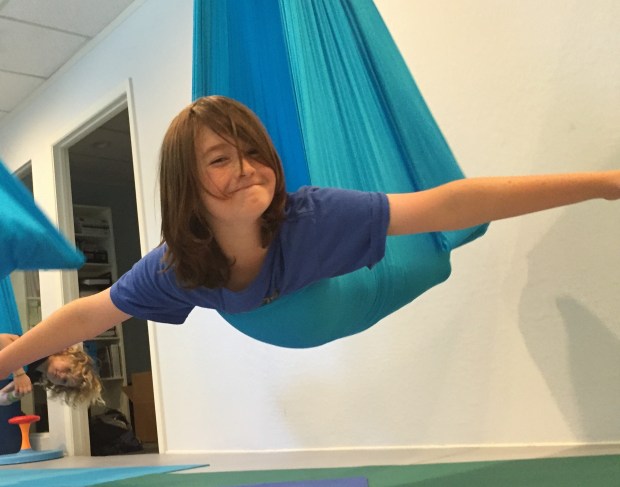
Jennifer helps a student achieve the monkey pose in her yoga hammock.

High-flying Fun

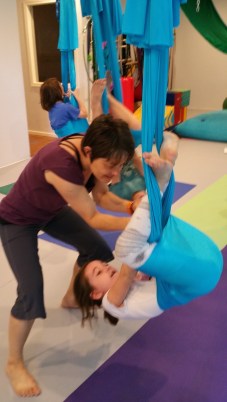
One such program is aerial yoga, and I recently had the pleasure of watching Jennifer Hector, a gifted instructor/therapist with Firefly Yoga Arts, lead a small group of special kids and their parents through a variety of yoga poses while suspended a couple feet above the floor. Jennifer offers 45-minute aerial yoga classes in Walnut Creek, CA, for school-aged kids.

The benefits of yoga for improving mind and body are well known, and therapists have used it to help people with developmental disabilities for many years. The relatively new aerial yoga discipline adds some unique dimensions that are particularly effective in helping increase mindfulness, body awareness, and strength.

The session begins much like a traditional yoga class, on the floor with a centering exercise and a series of poses bringing attention and mindfulness to one’s movement and breath. Then each student moves into a special yoga hammock, a stretchy sling hanging from the ceiling that supports the student while executing a variety of poses. Parents assist the children throughout the class to insure safety and success, build their confidence, and have a lot of fun together.

Mind, Body and Spirit

Jennifer explained that the hammocks provide a different type of feedback to the student that increases body awareness. Without the solid support of the floor, they must engage their strength differently to move into each position, which requires more mindfulness.

Aerial yoga, says Jennifer, can help build a more resilient nervous system, increasing body awareness, strength, and balance. Each pose involves multiple steps, which help improve key areas of executive functioning, such as attendance, initiation, and motor planning. It also can enhance overall well-being by boosting self-esteem, encouraging them to stretch beyond their comfort zone, and providing a sense of accomplishment.

aerial-yoga-group

Students have fun while benefitting from the physical, mental, and social aspects of aerial yoga.

Fun and Safe for Everyone

On the day I observed the class, Anna Tague was helping her 12-year-old daughter, Nicole, with each movement. Nicole was born with Phelan-McDermid syndrome, a genetic condition resulting from an abnormality of the 22nd chromosome. It is an extremely rare condition (only about 1,600 known cases globally) that causes global learning and expressive language delays.

“Nicole has very low body awareness,” says Anna, “so aerial yoga helps her be more aware.” Anna noted the importance of Jennifer’s calm, supportive approach. “She creates a very comfortable and safe place for the children and parents, which isn’t always the case with other programs.”

They met Jennifer at Anna’s school in Moraga, CA, where she was a paraeducator for 10 years and led a yoga program for special needs kids. She is now a Marriage and Family Therapist, continuing to work with special kids and their families in her psychotherapy practice at Treehouse Family Counseling Services in San Ramon, CA.

She learned of aerial yoga and was trained in the Yogapeutics method by founder Lindsey Lieneck in Austin, TX. She launched Firefly Yoga Arts and began teaching aerial yoga in 2016. If you’re interested in learning more or registering your child for a class, check out her new website at http://www.fireflyyogaarts.com/. If you live outside of Contra Costa County in northern California, look for another program closer to your home. It is growing in popularity across the country.

“The kids think it’s super fun,” says Jennifer. “That’s the best scenario for learning.”

About me: I am Pete Resler, a dad of two boys with specialhead and shoulders needs. I created this blog to tell stories of exceptional people, including those with special needs and those who give of themselves to make life better for them. My hope is that these stories expose more people to what’s good in the special needs world and inspire them to give of themselves to make life better for those with special needs.
You can help:  I’m always looking for new ideas. If you know someone you think should be featured, shoot me a note at specialopstories@gmail.com.

Blind to Limits

On any given day, you might find Daniel Stickney surfing or scuba diving in the Pacific Ocean, participating in his college’s student government, or assisting engineers to make technology more accessible. He’s traveled the world and learned new languages. You could say the 22-year-old has a great life, that he holds the world in his hands.

The fact that he can hold anything in his hands is little short of a miracle, considering that shortly after his birth the doctors told Danny’s parents that he had cerebral palsy and would likely live his life in a fetal position.

“Daniel is a gift from God,” says his father, Dyer, a single parent who made it his mission to do whatever he could to help Danny live as independent a life as possible. Finding little help close to home, Dyer expanded that mission to other parts of the world in search of therapies that would prove the doctors wrong. Thanks to intense physical therapy at a young age, Danny is able to use his hands well enough to do many things others with his disability can’t.

Yes, I’m disabled, and…

Danny’s disabilities are merely conditions, hardly limitations. When I first sat down to talk with him and his older brother, Stanford, I asked Danny to tell me about his disabilities. He told me that he is legally blind due to cortical visual impairment, which limits his vision to a periodic sliver from the edge of his right eye.

I expected him to talk about his CP, so I prompted him for more. I got silence.

Stanford explained that Danny was raised without awareness of his disabilities. It wasn’t something he paid attention to until fairly recently. Stanford explained that their father refused to let any of the children’s limitations prevent them from participating fully in life. The focus is always on what each member of the family can do, not what they can’t. Never why, always why not.

Stanford then prompted Danny to talk about his CP, and Danny spoke briefly about his use of a wheelchair. He quickly shifted the conversation to how much he enjoys speaking with people in retirement homes to help them make their own transition to using a wheelchair. The more I tried to get him to talk about himself, the more he talked about how he loves helping others.

Danny is also a “big man on campus” at the College of Adaptive Arts in San Jose, where he takes classes and is vice president of the student government. When he’s not in school, he gives a lot of his time volunteering with various organizations. He is currently a board member for the California chapter of TASH, a disability advocacy organization, and was a featured speaker at its 2015 national conference.

danny-filming

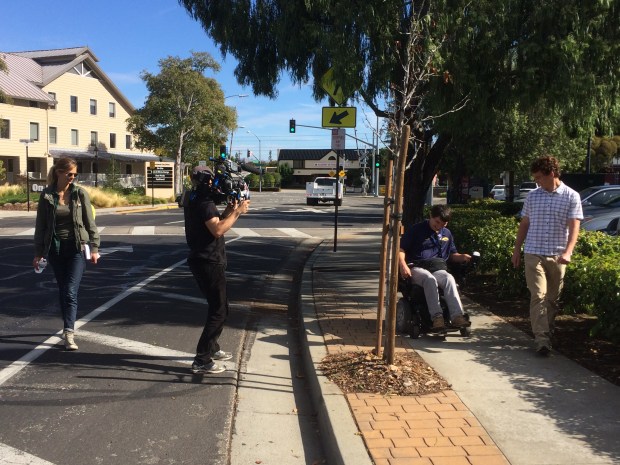
Danny navigates a sidewalk in Los Gatos, CA, during filming of “A Day with Danny” for the Google Accessibility Team.

Shaping tech access

Like any “millennial,” Danny loves technology. He and Stanford had the opportunity to hear Charles Chen of the Google Accessibility Team speak at the Vista Center Blind Expo in Palo Alto, CA, about the work the team was doing to make technology accessible to everyone. They chatted with Charles afterward and soon were meeting with the team and testing a variety of equipment and applications designed to help the visually impaired and people with limited or no fine motor skills access technology.

Danny was also featured in a Google Accessibility documentary called “A Day With Danny,” which was used internally and to promote the company’s Google Impact Challenge: Disabilities program, through which it is donating $20 million to 29 non-profits that are using technology to address a variety of accessibility challenges.

A better wheelchair

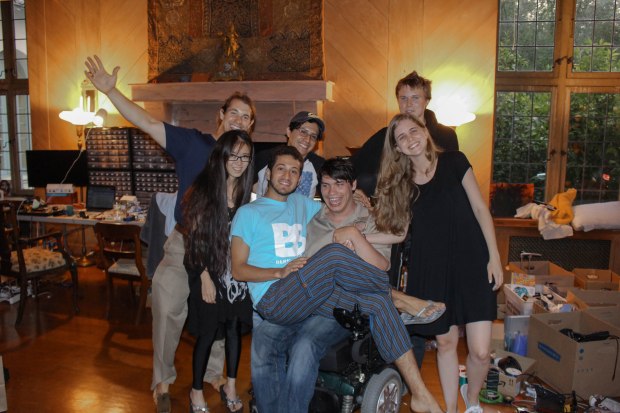
This summer I spent an afternoon at Danny’s home in Los Gatos, CA, to observe what Danny called a “Makeathon.” A group of young engineers and creative problem solvers lived with Danny and his family for a week to observe him and develop ways to help him in his daily life.

makeathon-group

Danny and his brother, Stanford (back row, left), take a break for a group photo with the “Makeathon” engineers.

By the time the group departed, Danny had a wheelchair equipped with infrared sensors that alert him to obstacles and dangers as he moves about. The engineers used existing technology to design a new type of detection system that alerts Danny when he nears stairs or other potential dangers. They will share what they learned in the open-source community in hopes that others will take their information and adapt it to solve other problems.

Two of the engineers, Stephanie Valencia and Tomas Vega, are co-founders of Assistive Labs, a “global team of dreamers and doers” working to “increase access to assistive devices for people living with disabilities in global markets by collaboratively building adapted and affordable devices” in the areas of health, education, communication, and mobility.

(I will be writing specifically about the “Makeathon” and Assistive Labs in a separate post, so stay tuned. And I hope to include video of me driving an early version of Danny’s retrofitted wheel chair. Too funny to miss!)

What’s next?

Danny views his future as limitless. He wants to continue his advocacy work for people with disabilities, particularly those who are visually impaired or who use a wheelchair. “I love to be involved in the community,” he says. “When I get a chance to help people with disabilities, I try to make life better for them.”

“I want to make it clear that even though I’m in a wheelchair I’m still a human being,” he says. “Anything I think I can do, I can do.”

ArtThread Making a SPLASH! in Special Needs Community

I am a writer. I string words together to communicate information, persuade, amuse. I express my creativity by thoughtfully using language to paint vibrant pictures and performances in your mind, making you feel, think, react. It is my art. When I write I am filled with light.

For people with special needs, their ability to communicate, to express their feelings, to ask for help, to explore what is possible are often stymied by physical or mental limitations. Without an expressive outlet, their inner light is burdened by darkness. They can’t easily find a way out, so they may never become their best selves.

Art can be the switch that fills the darkness with light, and Jay Klein (founder and CEO) and Rob Rothschild (president) of the ArtThread Foundation, are making artistic expression easy and accessible with an online art program centered on a “digital Etch-A-Sketch” tool called SPLASH! And it is doing wonders for people of all ages who had been limited by their own minds, bodies, or environments.

student

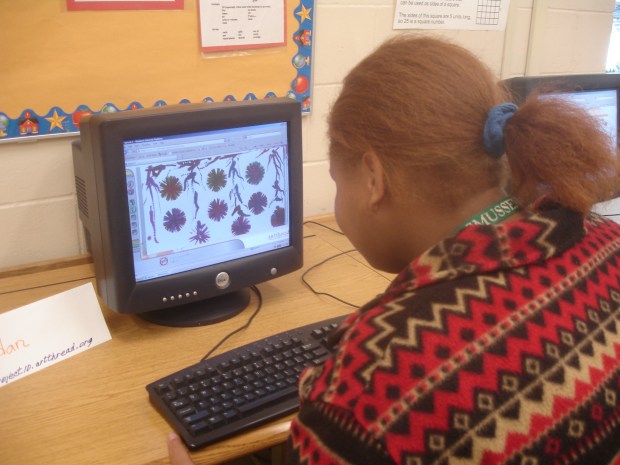
Try SPLASH! It’s free! Just set up an account and click “Create Art Online.”

“Our mission is to make art and creative expression more available to everyone, especially those impacted by social circumstance and physical limitations,” says Jay. Through the ArtThread Foundation, teachers are using SPLASH! in schools across the country to help children learn, express themselves, vent their frustrations, discover their creativity, and build self-esteem. “This is an adaptive technology that enhances success for students with disabilities,” says Jay.

The Power of Expression

Alonna had the opportunity to try SPLASH! when she was in her early 20s, shortly before aging out of the Florida school system. She lives with spina bifida, a spinal birth defect that affects her ability to walk and learn. She made it through high school in St. Petersburg and entered a transition program called Project 10 to prepare for living in the adult world. Project 10 is an ArtThread “pARTner” and uses the program to help students explore their artistic side.

“She really took to it in a special way,” says Rob Rothschild, president of ArtThread Foundation. Alonna was one of  a small group of Project 10 students who were selected to participate in Work of Art (WOA), an ArtThread program that teaches participants how to turn their love of art into an online business.

alonna_torres

Alonna in her SPLASH! studio

Developed in conjunction with VSA Florida and funded with a grant from The Able Trust, WOA helps students set up e-commerce businesses through which they can sell products featuring their original art. Through a custom portal to the online marketplace Zazzle, the artists create and sell shirts, coffee mugs, and other items featuring their work.


Rob showed Alonna how to set up and manage her store and design products on the Zazzle platform. “Alonna was very shy,” says Rob. “Learning how to create art and sell it in her own online store really boosted her confidence. She really took to it in a special way.”

“I love to paint and draw and be creative,” she wrote after launching her online store. “When I do art I am free from all the challenges that I face on a daily basis.”

How It Began

The initiating concept for ArtThread was born from Jay’s National Institute of Health, National Cancer Institute, and U.S. Department of Commerce funded research at the University of Florida. “I was studying the effects of artistic expression on symptom management in children undergoing cancer treatment,” says Jay. “I found that they had a better quality of life because they found meaning in the art. People who are more resilient have been able to attach positive meaning to their journey. That positivity displaces the negativity of their circumstance.”

“Then it dawned on me that it could help people with disabilities as well,” he says. “That’s when we came up with the idea to create the ArtThread Foundation as a way to develop the tools and partner with organizations that would benefit from it.”


“Any place there is no darkness there is light.”


Jay used the power of creative expression as a survivorship tool himself when he battled and beat cancer as a young man, and he is passionate about using technology and creative expression to foster self-esteem and community among children with disabilities, health challenges, and difficult social circumstances. The foundation partnered with Carnegie Mellon University to develop SPLASH! and the platform for the online art galleries.

Amazing Results

ArtThread has taken root in Florida with organizations serving people with special needs such as VSA and Project 10, and in Sonoma County, CA, with the Early Learning Institute. It is also used at the Shriners Hospital for Children in Tampa, FL, where young patients can create art with SPLASH!, providing a way to express themselves and bring light into their lives.

At VSA, Bonnie Hammer is a teaching artist implementing the program in schools in and around Sarasota, FL. Special education teachers apply for grants through VSA to implement an 8-week program. At the start of each program, she works with the teacher to use the online art tools to enhance the curriculum, whether it’s learning colors and shapes, combining shapes to build things, or learning math and science.

“It’s like a giant coloring book,” says Bonnie. “Once the students see me using it, they get very excited and want to try it.” The program also helps students develop fine motor skills and can help students focus, relax, and express their feelings. “I’ve even used the program with young offenders in a juvenile prison,” she says. “They have a lot of anger and other issues, and through the creative process they’re able to work through them.”

wow

ArtThread opens limitless possibilities for people of all abilities.

Karen Holtman tested ArtThread with kindergarten students at John B. Riebli Elementary School in Santa Rosa, CA. “Jay asked me to collect data to document how effective the program was with 5-year-olds. It had only been used with older children and adults, so he was skeptical it would be successful.”

“It was extremely popular with the kids,” says Karen. ArtThread provided the hardware for three SPLASH! stations in her classroom! She used it to teach the children colors, shapes and patterns. She paired them up and had them copy what one another created, teaching them how to work together. “It really helped lay the foundation for using technology in a fun way.”

Turn on the Light

Jay and Rob would love to see ArtThread in every school, particularly those that have eliminated the arts because of budget constraints, so students can use art to discover their abilities and unlock their full potential.

“When you remove art, you remove not only an individual’s ability to express himself, but you also remove a society’s ability to express itself,” says Jay. “Creativity is a key part of our wellness.”

If you would like to begin a program in your school or organization, contact ArtThread to become a “pARTner.”

You will be amazed at how quickly the light chases away the darkness.

About me: I am Pete Resler, a dad of two boys with special head and shouldersneeds. I created this blog to tell stories of exceptional people, including those with special needs and those who give of themselves to make life better for them. My hope is that these stories expose more people to what’s good in the special needs world and inspire them to give of themselves to make life better for those with special needs.
You can help:  I’m always looking for new ideas. If you know someone you think should be featured, shoot me a note at specialopstories@gmail.com.

A Creative Heart

Like anyone, Jenny Unrein has her ups and downs. “I like to draw and make people happy,” she says, but “I don’t like people staring.”

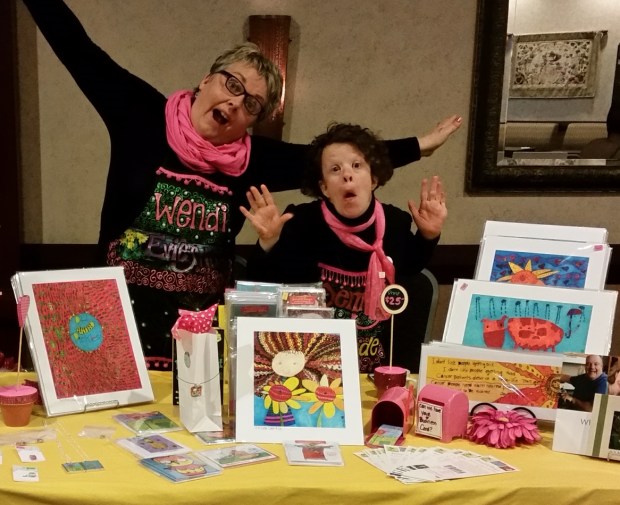
Jenny is the 27-year-old artist behind JennyLU Designs, an original art business in Topeka, Kansas, that she co-owns with her step-mother, Wendi Unrein.  Born from a desire to help others, the business is doing well, but it’s not easy.

Sure, any business will go through ups and downs, but Jenny is not just any business owner. She has Williams syndrome (WS), a rare genetic disorder related to the absence of several genes in the 7th chromosome. People with WS have developmental delays, health issues, and distinctive facial features, sometimes referred to as “elfin”, thus the frequent staring.

JennyLU Wendi and Jenny

Wendi and Jenny clown around at the JennyLU Designs booth.

Inspiration

“I used to make cards for my mom and for other people to make them feel good,” says Jenny about her life-long love of drawing. Cats and dogs, hearts and flowers are her favorite subjects.

“The thing that caught me was that her drawings were so passionate,” says Wendi, an artist and art teacher. She noted that Jenny rarely draws just to draw: “For her to do art, it has to be for a purpose, for someone else.”

“One day I asked her to draw a picture with a Sharpie, then I colored it in. It was very cute,” says Wendi. That first collaboration grew into a fun activity for them both.

JennyLU program cover

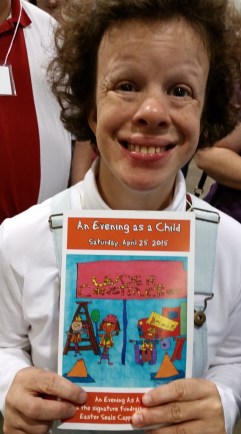
Jenny with the Topeka Easter Seals Capper Foundation program, featuring her original artwork

“One day I was watching Oprah and I saw a girl who had a lemonade stand to help people with cancer, and I wanted to do something to help, too,” says Jenny. So she and Wendi decided to create pictures to donate to fundraiser auctions.

“We took some of the pictures to Jenny’s school and the teachers bought all of them,” Wendi said. “That’s when I realized people would actually pay for Jenny’s pictures.” And JennyLU Designs was born.

That was eight years ago and since then the pair has traveled around the country to conferences and art shows where they sell prints, called “Jennydoodles”, and a variety of other products featuring Jenny’s art, such as note cards, jewelry and calendars. The products are also available on the JennyLU Designs website.

But it’s not always easy for Jenny. She struggles with anxiety, common among people with WS, and it’s often hard to keep her motivated to create new pictures. “Jenny really likes going to the conferences, so when she knows there is one coming up, she stays motivated,” says Wendi.

“We do well at conferences related to disabilities,” says Wendi, giving all the credit to Jenny. One of the most noticeable traits of people with WS is their social, endearing personality. They are very personable, caring, and aware of others’ feelings. “When they see Jenny, they buy,” says Wendi.

And Jenny has become a popular speaker at those conferences, as well, delivering workshops on owning a business and educating others about Williams Syndrome.

JennyLU plaques

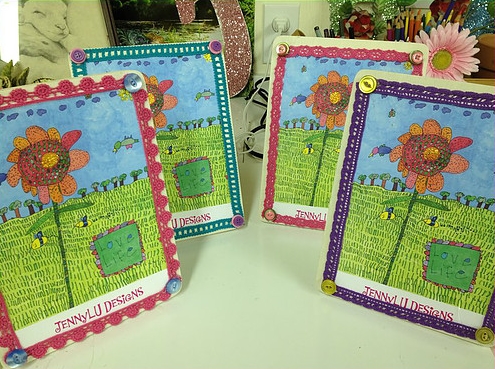
Whenever they meet someone with cancer at a show or convention, Jenny and Wendi give that person a Love Life plaque as a show of support.

Art for good

But Jenny has remained true to her original motivation, regularly donating her artwork to a variety of non-profits, both locally and nationally, such as the American Cancer Society. “If I see someone with cancer, I think it’s important to help them. It makes me sad,” says Jenny.

She also creates the cover artwork for the program at the Easter Seals Capper Foundation annual fundraiser in Topeka and donates artwork for the auction. “We donate to a lot of the organizations that help our kids,” says Wendi. In 2015 they also began donating proceeds from card sales to St. Jude Children’s Research Hospital.

People love Jenny’s work so much many have commissioned original works, some from overseas. Her work has also hung in the White House and the Kansas State House.

“My favorite part is seeing people’s reaction to my artwork,” says Jenny. “I love having the business because I’m making a difference.”

Having the business has also made a big difference for Jenny, giving her confidence and purpose. “It doesn’t matter what kind of disability you have,” she says, “you can run a business.”

head and shouldersAbout me: I am Pete Resler, a dad of two boys with special needs. I created this blog to tell stories of exceptional people, including those with special needs and those who give of themselves to make life better for them. My hope is that these stories expose more people to what’s good in the special needs world and inspire them to give of themselves to make life better for those with special needs.
You can help:  I’m always looking for new ideas. If you know someone you think should be featured, shoot me a note at specialopstories@gmail.com.

ENN: An Exceptional Experience

In the summer of 2007, 15-year-old Remington Fox walked onto the grounds of Camp Arroyo near Livermore, CA, literally terrified of what he was walking toward. His mother had nudged him to volunteer at a camp for youths with special needs and he was not happy about it.

“My parents heard that this camp was looking for volunteers, so my mom got me an interview. I wasn’t interested at all. I was really intimidated. I didn’t know anything about people with special needs,” he says. “But they thought it would be good for me, so I did it.”

Fast forward to November 2015: My nearly 15-year-old son Christian (heretofore “C”) walked onto the grounds of Camp Arroyo for his first residential camp, a 2-night, 3-day stay only 40 minutes from home. He wasn’t at all terrified, but rather was ready to cut loose without Mom and Dad, fearless as always and eager for Mom to head home.

My wife, Sarah, had camped out most of one night the previous spring to get one of the last slots at the uber-popular Exceptional Needs Network (ENN) camp. After checking in, C met his personal camp counselor, the one and only Remington, who by then was one of the most experienced counselors there.

ENN Remington & C

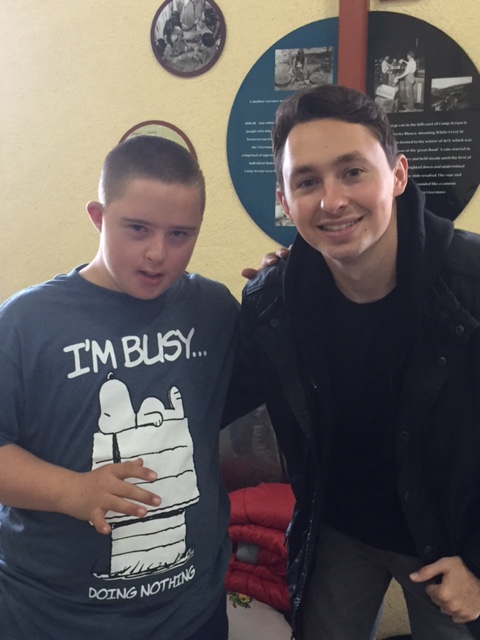
Christian and Remington

“I volunteered that first summer and fell in love with it,” says Remington. “It really changed my perspective on kids with disabilities.” He’s worked every camp session (three per year) since that first one, and he plans to do it as long as he can. “It’s like a vacation for me. It resets me on what’s really important.” C now feels the same way, about the vacation part anyway.

A Little History

“When my son was young, I needed to find something for him to do outside of school, especially during the summer,” says Valerie Hund, one of the founding mothers of ENN and the current board president. There were no activities available in the Livermore area for kids on the autism spectrum, like Grayson, who need a level of structure and understanding that traditional programs don’t usually provide.

“At that time there was only one after-school program in the area for kids with special needs, but nothing during the summer,” she says. In 2001, she was introduced to another mother with similar concerns, and before long they had formed a small group that eventually became ENN.

They wanted to establish a camp to give the kids an opportunity to enjoy outdoor activities and, equally importantly, give the parents a well-deserved break. “That’s what is different about us,” says Laura Peters, ENN’s camp director. “The other special needs camps in this area are all family camps. Ours is a respite camp just for the kids. As important as it is for the kids to have their own experience, it is also very important that the parents get a break.”

By the next summer, the group had organized its first camp for a small group of children, mostly the children of board members and their friends.

They were fortunate to get access to Camp Arroyo, which the Taylor Family Foundation helped established in 2000 with the East Bay Regional Park District. Operated by YMCA of the East Bay, Camp Arroyo hosts a variety of camps for children with life-threatening and chronic illnesses, developmental disabilities, and youth-at-risk.

ENN climber

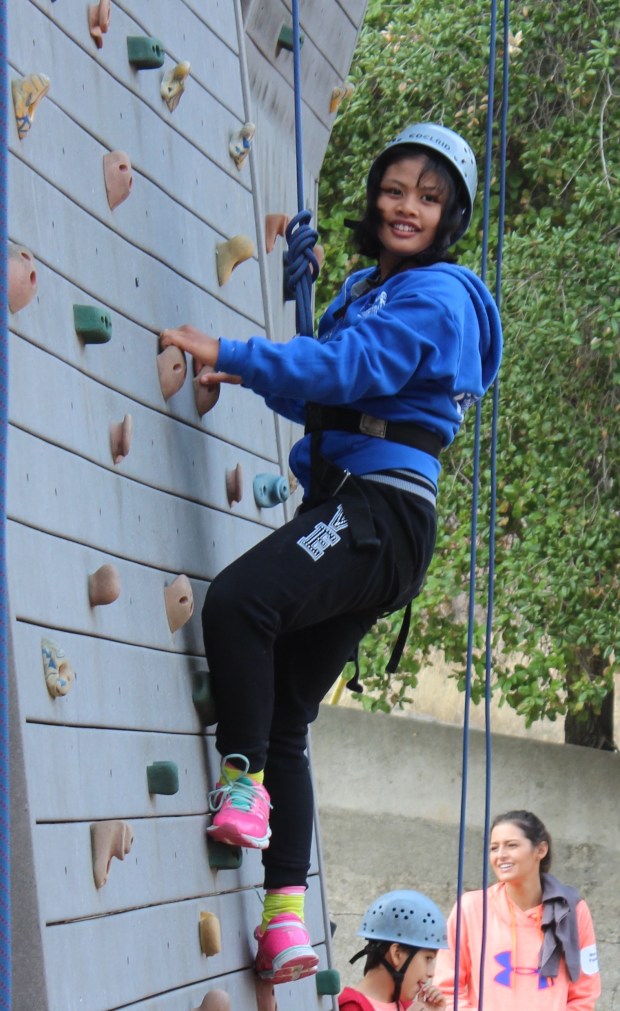
Chelsea tackles the climbing wall at Camp Arroyo.

An Awesome Camp Experience

ENN has three camps there each year, two in summer and one in the fall. Campers take part in a wide variety of activities, regardless of their disability, including swimming, zip-lining, a climbing wall, arts and crafts, and other fun activities.

The 45 slots per session fill up quickly every spring, so if you’re not in line in the wee hours before sunrise on registration day, you might be out of luck.

ENN drummer

Brandon keeps the beat.

Exceptional Staff

Remington’s experience is common, first volunteering as an activity aide until turning 18, then becoming a counselor, assigned to one camper for the duration of camp. It’s not 9-to-5, but around the clock from the time the camper arrives until he leaves 3 or 4 days later. And sleep is not guaranteed; ask Remington, who spent many late night hours with C in the aptly named “Up All Night” cabin.

“When I started (as a counselor), they gave me the easier kids,” he says. “Now that I’m more experienced, they often assign me kids that need a little extra help.” He made a strong connection with his very first camper, Ryan, who comes back every summer and requests Remington as his counselor. “He’s my buddy,” says Remington. “We talk throughout the year and even get together for lunch sometimes.”

The counselors are paid, but for most it is a labor of love. “We think it’s really important to have the best staff and we’ve done whatever we needed to do to be sure we could pay them,” says Valerie.

Making Ends Meet

“We rely a lot on fundraisers throughout the year, but a lot of that money dried up during the recession. At the end of our camps in 2009, many of the staff gave some or all of their pay back to help us stay afloat.”

While parents do pay a nominal registration fee, there is no fee to attend camp. To offset the $20,000-plus cost to operate each camp session, the all-volunteer ENN board conducts fundraisers throughout the year, individuals donate or raise funds specifically for ENN, and parents are encouraged to submit a request for funding to their Regional Center for their camp session.

And, of course, donations are always welcome.

ENN zipline

Josh flies on the zipline.

Making Memories

Each camp session ends with a talent show and awards ceremony with specific recognition for each camper. C earned “The Steph Curry Basketball Award” for his MVP-like moves and his deft touch with the roundball.

Sarah, along with the other parents, attended the final event, but, knowing that meant the end of camp, C did not hide his displeasure when he saw her.  As disappointed as he was to have to go home, he is now looking forward to his next camp, this time in the summer with the chance to swim, his second favorite activity after bowling.

Remington, who is a new college graduate and an aspiring children’s book author, will be back as well. “They say Disneyland is the happiest place on Earth, but I think it’s ENN camp. It’s special. It really is a wonderful place.”

head and shoulders


About me: I am Pete Resler, a dad of two boys with special needs. I created this blog to tell stories of exceptional people, including those with special needs and those who give of themselves to make life better for them. My hope is that these stories expose more people to what’s good in the special needs world and inspire them to give of themselves to make life better for those with special needs.
You can help:  I’m always looking for new ideas. If you know someone you think should be featured, shoot me a note at specialopstories@gmail.com.