On the day we found out that Christian would be born with Down syndrome, family and close friends tried to make us feel better by telling us, “God only gives you what he knows you can handle.” Their intentions were pure, but I couldn’t help but feel that diagnosis was more of a punishment than a gift. I’m not proud of that, but it’s the truth.
It was 16 years ago, but I can still vividly remember sitting with Sarah while a genetic counselor at a large Catholic university hospital near Chicago explained what was known at that time about the physical and mental effects of trisomy 21, the medical name for Down syndrome. She made it clear that those effects can manifest themselves in mild to severe ways, but there were some certainties that we thought would change everything.
The counselor then presented our options. Options?!? The soft spoken lady at the Catholic hospital told us we could have the baby and either keep it or give it up for adoption, or terminate the pregnancy.
I would have never considered termination, but she mentioned it and it made me think very briefly about it and, more importantly, why we wanted to have a child. It wasn’t because we expected to have the perfect child. It was because we loved one another and wanted to have, raise and love a child together. We had made that decision several months earlier and no other decision was necessary.
As certain as that sounds, we were both very shaken and disoriented by the news. The script of our lives had been altered and we had no idea what that meant.
Now what?
Over the next several weeks we mourned the loss of the “normal” child we had been preparing for. We continued on with the things that still had to be done, such as preparing the baby’s room, picking names, attending baby showers, and so on. We did a lot of research and talked to lots of people to try to fill in the blanks about the future, and then we waited to see what would happen.
The pregnancy grew complicated and Christian was born four weeks early by emergency C-section. He was only five pounds, but he and Sarah both came through it fine. He had none of the heart deformities or other physical issues that occur more frequently in Down’s kids. We felt fortunate.
We began weekly treks to Easter Seals when he was just six weeks old, hoping the therapeutic interventions would help with his development. He hit all of his milestones, just later than typical kids, and he was happy and healthy. We adjusted to our new life.
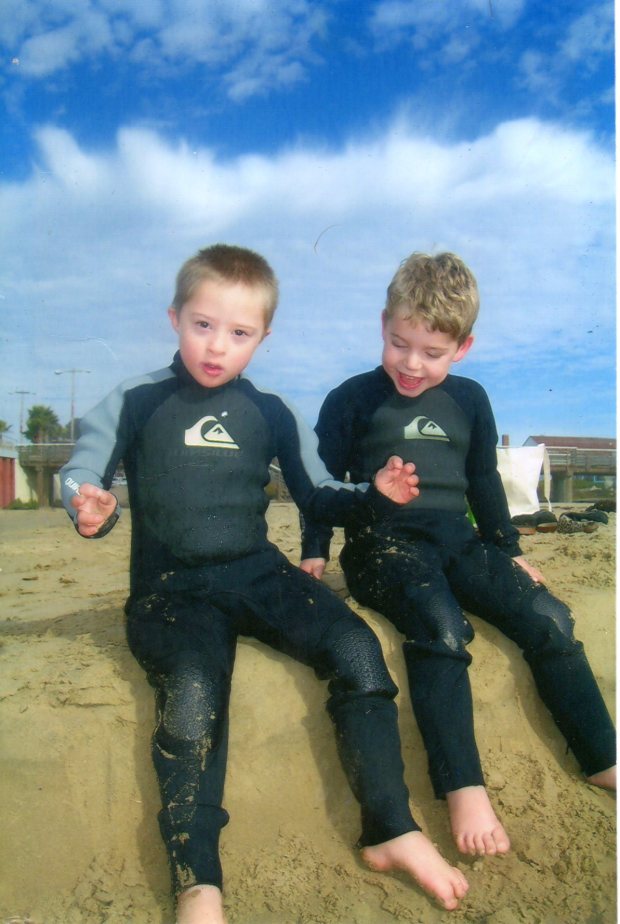
Christian and Ben, Pismo Beach, CA, 2007
A little ‘normal’
A couple years later Sarah was pregnant again. We refused the genetic testing this time. Our life plan had become a daily plan, so we were OK with whatever God gave us. Benno was born following a normal, uncomplicated pregnancy. He was healthy. He had the normal number of chromosomes. This was how we had imagined it would be; you know, normal.
Within a few years, he began showing some signs of autism, nothing in the “Rain Man” realm, just some behavioral anomalies that caught our attention. He was evaluated and the diagnosis was confirmed. Not so normal after all.
Friends told us that God must really have faith in us as parents to give us two special children.
Apparently the almighty’s faith in us was immense, because it wasn’t long before Christian was evaluated and also diagnosed with autism. And Ben has ongoing struggles with anxiety, obsessive-compulsive disorder (OCD), and impulse control challenges.
And they’re both fully infected with puberty.
Other than that, things are normal.
Why us?
Ever since that day we met with the genetic counselor, I’ve frequently wondered why this was happening to us. Were Sarah and I being punished for something? Were our children being punished? What did we do to deserve this?
I’ve looked at other parents and their typical kids and wondered why this happened to us instead of them. What was so special, or awful, about us for this to happen?
I feel guilty, petty and selfish because of these thoughts, but I still have them sometimes, especially on the more challenging days.
Every time I’m embarrassed by their behavior in public, every time I get frustrated because they can’t understand or process what I tell them, every time I lose my cool and snap at them, I feel like a failure. Maybe God was wrong about me.
Sarah and I talk about these things a lot. The fact that we still talk at all could mean that God knew what he was doing. The stress of raising special kids has at times torn us apart and at other times brought us together. Many, many marriages don’t survive the challenges of raising a special needs child. Ours has survived that, and three major relocations, two layoffs, and whatever is next.
We are not perfect, but we are certainly determined to prove that God knew what he was doing.
About me: I am Pete Resler, a dad of two boys with special needs. I created this blog to tell stories of exceptional people, including those with special needs and those who give of themselves to make life better for them. My hope is that these stories expose more people to what’s good in the special needs world and inspire them to give of themselves to make life better for those with special needs.
You can help: I’m always looking for new ideas. If you know someone you think should be featured, shoot me a note at specialopstories@gmail.com.
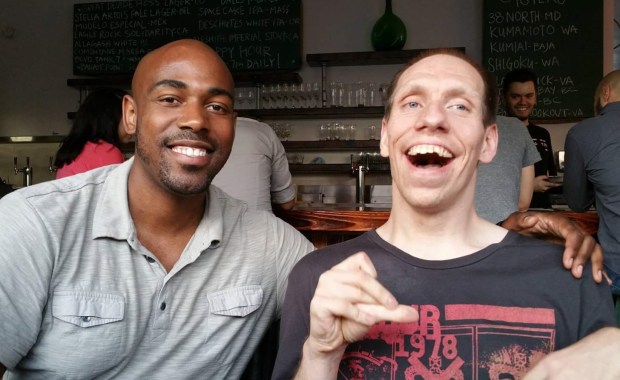
 blog to tell stories of incredibly good people, including those with special needs and those who give of themselves to make life better for them. My hope is that these stories expose more people to what’s good in the special needs world and inspire them to give of themselves to make life better for those with special needs.
 Special Ops