The Subplot of Marlys Kehm in the Evolution of Special Education
In 1945, Marlys Kehm was a nursing student, newly married to her sweetheart, who had recently returned from captivity in a World War II German prison camp. But she was not allowed to remain in school because, she was told, a married woman’s “place is in the home.”
Today those words would make rights activists seethe and lawyers salivate, but post-war America was very different then.
It was also very different for people with disabilities. Many were sent away by their families to live in institutions. None were in public schools. They were “the handicapped”: “retarded,” “crippled,” “Mongoloid,” “idiots.” The use of these terms causes outrage today, but then they were the words used to describe those we now call the “differently abled.”
Marlys didn’t know it at the time, but, because society had closed the nursing door to her, she would take a path years later that would help shape the way disabled children are educated and assimilated into society today.
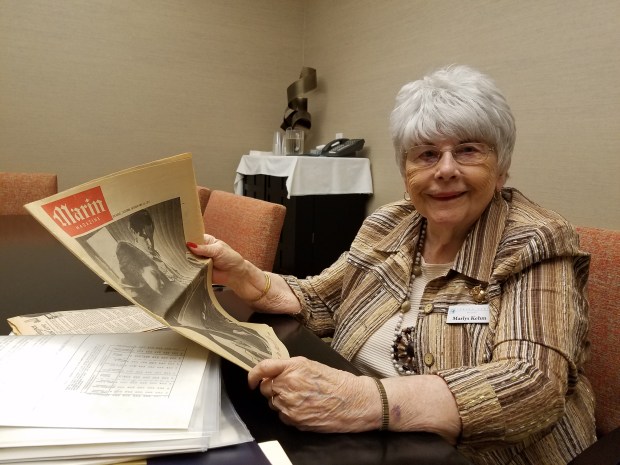
Marlys Kehm looks through a thick scrapbook from her distinguished career as an early special education innovator.
Opening a New Door
Marlys settled in to raising her family, moving between military bases over the next 20 years. As her children grew older, she began taking college classes with the hope of becoming a teacher. While they were stationed in the Panama Canal Zone in the early 1960s, she took a class taught by Dr. James M. Wolf from Florida State University, a leading authority in the developing field of special education.
“It was fascinating. That’s when I really became interested in special education,” she said.
In 1963, her husband was transferred to the U.S. Army base at the Presidio near San Francisco. Dr. Wolf encouraged Marlys to continue her studies at San Francisco State University, which had a high quality special education program.
She completed her degree there in 1965 and posted the highest score on the San Francisco School District teacher’s exam, landing a job teaching the “educable mentally retarded” at Horace Mann Junior High School in the city’s Mission District.
Start Where They Are
It quickly became apparent to her that the standard educational method she learned in college was not going to work there. The standard method was, and still is, to design and teach a general course of study to the entire class, and then grade each student based on progress against a standard. But, Marlys found, her special students were each starting from a very different place, with different challenges. The standard method would not work for most of them. Her thinking and approach started to change
The next year, Marlys was asked by a former SFSU professor to teach in Novato, north of San Francisco. She found similar issues there, including students with behavioral problems. While the standard approach was to discipline the child, Marlys wanted to first understand what might be causing the child to act out. That’s when she began visiting her students’ homes.
Understanding Annie
She tells the story of “Annie,” a young girl there who had severe behavior issues. Marlys went to Annie’s home to meet with her father, who was raising his children alone. He urged Marlys to spank Annie, as that was the only way he could get her to listen.
Marlys suspected that might be indicative of the larger problem, so she did the opposite. “I could see this family didn’t have much. I had a friend who gave me clothing that no longer fit her daughters,” said Marlys. “I would ask Annie to come to school early, and I would give her the clothes and teach her how to care for herself. It wasn’t long before her bad behaviors stopped. The principal noticed the change and asked me what I did.
“I showed her that I cared. School became a safe place for her.” Marlys helped build Annie’s self-esteem, and that opened the door to learning. She never would have been able to do that if she treated her just like every other student. She figured out where Annie was and met her there; that’s where her education began.
Treasure Hunt
Soon, the nuns running St. Vincent’s School for Boys in San Rafael asked the Marin County special education department to provide a teacher for a class of special boys. They sent Marlys.
St. Vincent’s opened in 1855 to care for the orphans of California’s Gold Rush, and when Marlys joined the staff in the late 1960s, it was a residential care facility for emotionally disturbed boys.
“That was a really wonderful place. The nuns truly cared for the boys,” says Marlys. “You had kids with behavior problems, so how were you going to reach them to teach?”
Marlys spent each evening planning her approach with each student for the next day. She shared the story of one boy who would not sit still long enough to learn. “I made up a treasure hunt for him,” she says. “I would hide his assignments around the room and give him clues about where to find them. He had to finish each assignment before he could look for the next one. It gave him a reason to focus and he began to learn.”
“I reached down to him and the other boys,” she says. “You had to teach each one individually.”

Marlys exchanges information with another Marin County school administrator visiting Forest Meadows Development Center in 1971. (Please excuse the quality; copied from a very yellowed Marin Independent-Journal clipping.)
‘Uneducable’ Youth
Word of her innovative, caring approach to teaching special children was spreading. In 1970, she was asked by the Marin County Schools Office to run the new Forest Meadows Development Center at Dominican College in San Rafael. Marlys developed the programs and hired the staff. She served as the principal, then called “head teacher,” from 1970-75.
The students there were considered “uneducable,” mentally and physically affected children who were ineligible for the type of classes Marlys had taught in regular public schools. Forest Meadows was “a training school for the multiple-handicapped child and young adult,” according to a May 15, 1971, article in the Marin Independent-Journal.
“That was a challenge. It was not like teaching I had done before,” she recalls. “You really did have to start where they were. Some couldn’t feed themselves. We worked closely with the parents to figure out how we could help them.”
Forest Meadows was truly a community project. According to the Independent-Journal article, “There are four teachers, seven paid aides and 50 volunteers who come in during the week. On Mondays and Fridays nine girls from Edna Maguire Junior High School in Mill Valley work half a day and on Wednesdays six girls from Katharine Branson School in Ross help.”
“These young people have so much empathy for the handicapped and retarded… It’s wonderful. They really understand and help,” Marlys told the newspaper then.
Other volunteers included Dominican College students studying special education and “nurse-trainees” from the College of Marin. Dominican College allowed the county to use the land for free in exchange the teacher training and learning opportunities for the psychology, sociology and speech departments.
Teaching the Teachers
“All of the teachers at Forest Meadows were very young, including myself,” says Mary Falvey, who worked for Marlys beginning in 1975. “For many of us, it was our first job teaching.”
“She operated as if she were our mother, in the most gracious, supportive way. I’m just so grateful,” says Mary, who succeeded Marlys as Forest Meadows principal and went on to become the dean of the Charter College of Education at California State University Los Angeles.
“One of the most important things about Marlys was that she conveyed a sense of optimism and faith in the students, and it was contagious. She was always about joy. That was so important in our work, especially on the days when it was difficult.”
During this time, other Northern California counties were establishing similar programs and they sent staff to Forest Meadows to learn how Marlys did things. Mary recalls Marlys organizing regular gatherings of special education teachers from across California to network and discuss strategies. “We all cared so deeply about our students,” she says. “Those networking meetings were very important since there were no proven strategies. There wasn’t anything in the text books at that time.”
Marlys left Forest Meadows and continued her good work as head teacher at the George Miller, Jr. Center East in Concord, CA, beginning in 1976. In a Dec. 28, 1977, article about the center in the Contra Costa Times, Marlys said, “Our goal is to make each child as independent as possible, to keep children at home and in the community, and to prevent the need for institutional care. If it weren’t for the center, I think you’d find that many of these children would not be kept at home.”
During that time, she also served on the board of directors of the Division on Mental Retardation for The Council for Exceptional Children, a special education professional organization. In that role, Marlys conducted professional development workshops for California teachers and helped shape the best practices taught to special education teachers nationwide.
She retired in 1982, but remained active. The California Department of Education called on her periodically to mediate disputes between school districts and the parents of special needs students. She also worked for Good Shepherd Lutheran Home, working with families to move their institutionalized children into group homes when plans were announced to close the state institutions.
“Many parents didn’t want the state to close the institutions,” says Marlys. “They were comfortable with their kids there because they didn’t have to worry about how to care for them.”
Where She Is
Marlys recalls her career, her students and her colleagues clearly and fondly, despite the decades that have gone by. But there’s one thing that still bothers her a bit: In those early days of special education, other teachers considered special education teachers inferior, assuming that they taught “the retarded” because they didn’t have what it took to teach in a regular classroom.
“It was just the opposite,” says Marlys. “For them, it was all about curriculum; get the students from here to there. They didn’t look at the individual. Our job was much more difficult. We spent a lot of our own time getting to know the parents so we could understand the children and help them learn. We had to innovate because there really weren’t many people out there doing what we were doing.”
Since Marlys walked into her first classroom, the words we used then to describe people with disabilities have changed as most of the old ones mutated into derogatory terms. Special education has also evolved as psychiatry and education have advanced, providing tools and techniques to help teachers better serve the needs of differently abled children.
But one thing has never changed, and I hope it never will: the best teachers still meet each child where he is, just like Marlys did 50 years ago, despite the best academic wisdom of that time.
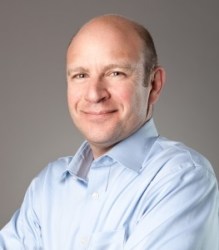 About me: I am Pete Resler, a dad of two boys with special needs. I created this blog to tell stories of exceptional people, including those with special needs and those who give of themselves to make life better for them. My hope is that these stories expose more people to what’s good in the special needs world and inspire them to give of themselves to make life better for those with special needs.
You can help: I’m always looking for new ideas. If you know someone you think should be featured, shoot me a note at specialopstories@gmail.com.
 Special Ops